Ask questions that a coat label cannot answer
Run a clean hand gently over the dog's back and ask how often the home is vacuumed or brushed. Look at the paws after a walk. Listen while the dog waits for a knock or another dog outside. One calm meeting will not predict every day, yet it gives you facts that a mix estimate cannot supply.[1]
Population research on mongrels deals with broad groups and life expectancy. It does not describe the loose hair, muddy feet, or barking pattern of a dog you are considering. Use group research to stay curious; use the meeting to plan the cleaning you will actually do.[2][1]
Make cleanup part of the walk routine
Put towels, a paw-cleaning spot, waste bags, and a hook for the lead near the door you use most. A small landing station keeps rain, grit, and the search for a bag from spreading through the room. The best setup matches the route the dog really walks.[1]
Pick up waste promptly and wash hands after contact with the dog or its supplies. CDC dog guidance treats those habits as part of healthy everyday care. The routine takes less effort when bags and a handwashing stop are already on the path home.[3]
Quiet is a pattern you learn together
Ask when the dog tends to become active, what wakes it, and how it handles the doorbell, delivery sounds, or a neighbor passing. Then picture the times your household needs silence: early mornings, calls, naps, and bedtime. Those two schedules need room to meet.[1]
A comfortable resting place away from the front door can reduce the number of small interruptions that reach the dog. Keep the first weeks simple enough that you can notice what changes the dog's volume or rest. The aim is a workable household rhythm, not a perfectly silent animal.[1][3]
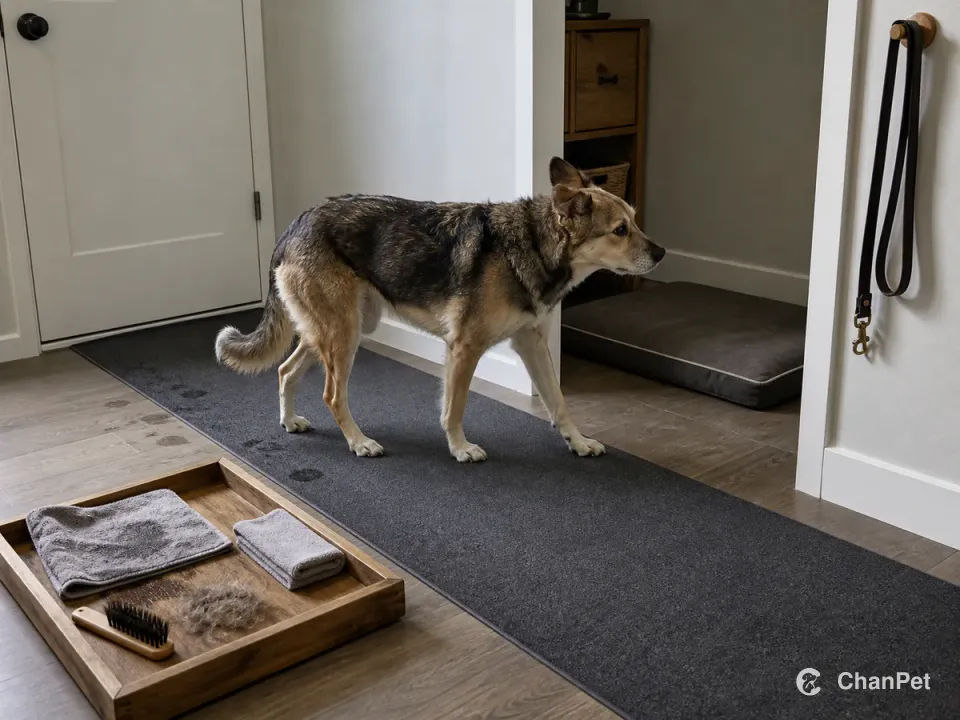
Damp marks stop at the runner, where paws and this dog's actual loose coat are cleaned. A closed mouth and voluntary move toward the rest mat reveal its settling and sound pattern.[2][3][1]
A tidy home starts with the right questions at the meeting
See the real cleanup before you choose
Meet the dog, walk the route, and plan the towels, bags, brushes, and quiet corner around what you observe. That makes a tidy home a practical project rather than a hope.[1][3]
Common questions
How can I predict shedding from a mixed-breed dog?
Sources
Sources used in this article
- [2]Investigating the relationship between inbreeding and life expectancy in dogs: mongrels live longer than pure breedsPeerJ
- [3]DogsCenters for Disease Control and Prevention
- [1]Selecting a DogAmerican Veterinary Medical Association