Turn the apartment into a cool recovery space
For a current Pug, the most useful apartment feature is a ventilated, cool place to recover after a short outing. Heat and exertion can increase the breathing load linked to brachycephalic airway obstruction.[1]
Pick the coolest practical time for toilet trips and keep the pace easy. Offer water and quiet rest immediately afterward, then notice whether breathing returns to the dog's usual pattern.[1][2]
Make the door a low-excitement zone
Elevator sounds, deliveries, and hallway traffic can turn a small apartment door into a source of excitement. Practice a slow move to a mat after the sound, then reward a pause before the dog approaches the entry.[3]
RSPCA recommends reward-based teaching and behavior support when concerns such as excessive barking develop. A note about sound, time, and body response gives a professional a better picture of apartment stressors.[3][1]
Choose a future apartment dog with comfort in mind
Apartment size rarely tells the full welfare story. For a future dog, prioritize a structure that supports easy everyday breathing over a face that looks appealing in a small-space photo.[1]
Bichon Frise, Toy Poodle, and Schnauzer each ask for their own grooming and activity commitment. Compare those needs with your actual workday and building routine before choosing a small companion.[2][1]
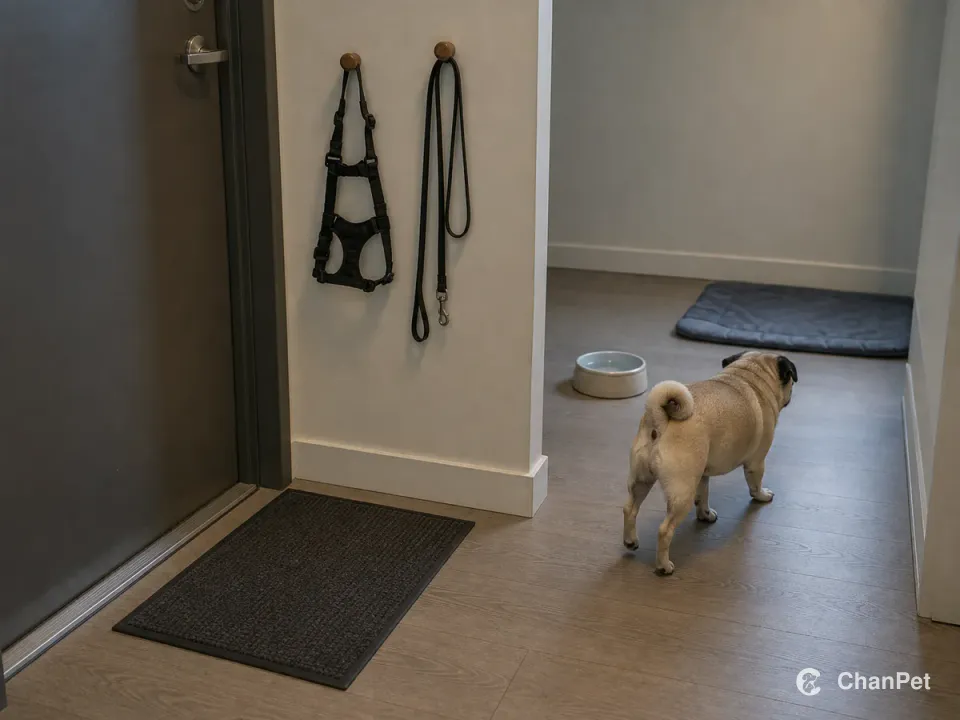
A closed door, a waiting mat set back from the threshold, and a clear route to water and cool rest turn the return from a short outing into a lower-excitement routine.[1][3]
Support a current Pug with cool, quiet routines and choose differently for a future home
Put comfort before the apartment aesthetic
Common questions
What should I watch after a Pug comes back from an apartment walk?
Offer water and a cool rest place, then notice whether breathing recovers as usual. Marked effort, weakness, or collapse needs urgent veterinary guidance.[1]
How can I make a Pug's apartment door routine calmer?
Reward a practiced move to a mat after hallway sounds and keep arrivals slow. If barking or tension continues to grow, collect notes and consult a qualified behavior professional.[3]
Sources
Sources used in this article
- [2]Pug Dog Breed InformationAmerican Kennel Club
- [1]Pug - Brachycephalic Airway Obstruction SyndromeUniversities Federation for Animal Welfare
- [3]How to Train Your Dog & Top Training TipsRSPCA