Use the hardest week as a current-care test
Put early classes, late study blocks, warm commutes, and housing transitions on one calendar. Then add the current Pug's coolest outing time, indoor recovery space, observation checks, and veterinary contact plan.[1][2]
A student carer should know what normal breathing and recovery look like for this dog. Heat sensitivity, slow recovery, weakness, or marked breathing effort call for timely veterinary assessment instead of a schedule workaround.[2]
Practice short departures before finals change the day
RSPCA advises building alone time in small increments and rewarding relaxed behavior. Practice while the term is predictable, then keep the current Pug's rest space cool and quiet when you leave.[3][2]
Use a phone camera occasionally to see whether the dog rests, paces, trembles, or vocalizes after the door closes. Those observations help you choose an easier next practice or ask for professional support.[3]
Plan breaks around the current dog's needs, then choose future dogs differently
Before a school break or housing change, confirm who can keep the Pug's cool rest, short outing, and veterinary plan intact. Share the dog's usual breathing observations and care contacts in one clear handoff note.[2][3]
For a future companion, start with Bichon Frise, Toy Poodle, or Schnauzer rather than repeating a short-face welfare burden. Compare grooming, exercise, and campus-life practicality before choosing a small dog.[1][2]
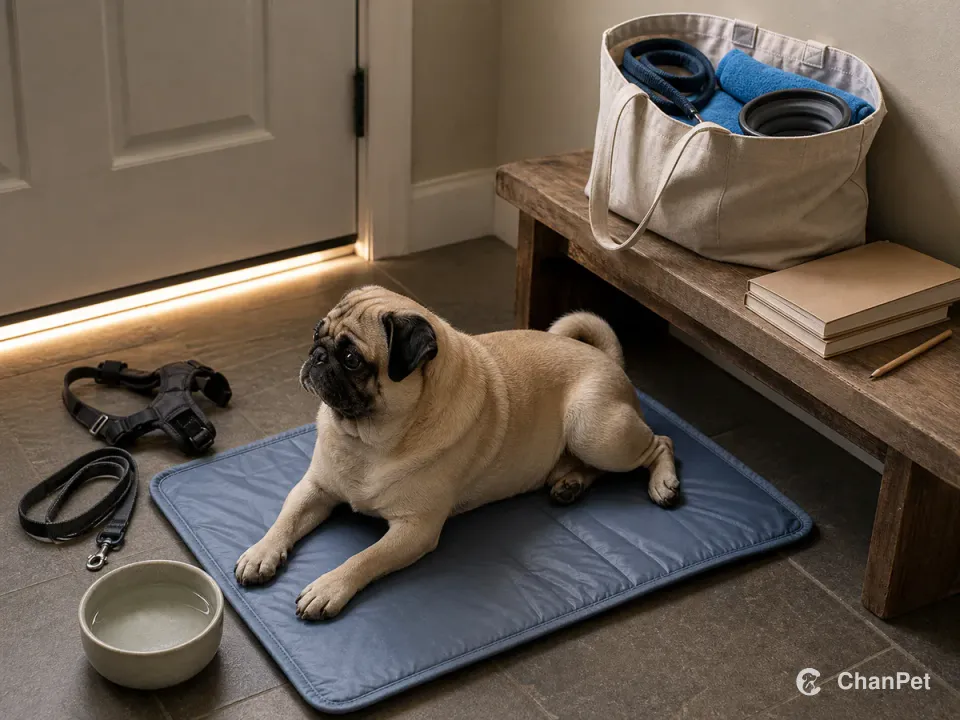
During the busiest weeks, keep cooling, water, and breathing recovery checks steady after short outings, and prepare the care tote for the backup carer.[1][2][3]
Current Pug care must survive the hard weeks; future choices can begin healthier
Treat the next exam week as a care rehearsal
Common questions
What should a student plan before leaving a Pug for an exam?
Sources
Sources used in this article
- [1]Pug Dog Breed InformationAmerican Kennel Club
- [2]Pug - Brachycephalic Airway Obstruction SyndromeUniversities Federation for Animal Welfare
- [3]How to Train Your Dog to Stay Home AloneRSPCA