Draw the cat's route before buying furniture
Ragdolls are substantial cats, so an apartment needs more than a window perch. Look for a route from a quiet bed to a scratcher, a window and a high resting place. A wide shelf or a solid cat tree is more useful when the cat can get there without leaping across a cluttered room.[1][2]
Put key resources in separate spots. Water beside food, food beside litter and litter beside a washing machine can make a small home feel smaller to a cat. FelineVMA guidance recommends choice and separation among the places cats eat, hide, scratch, rest and toilet.[2]
Make litter a place the cat can actually use
Choose a box large enough for the cat to turn and dig comfortably. Place it away from sudden noise and busy foot traffic. A Ragdoll who has to squeeze into a tiny box or pass a barking appliance may simply look for a calmer toilet spot.[1][3]
Scoop on a predictable schedule and watch for a change in litter habits. Cornell notes that house soiling has many possible causes, including medical and environmental problems. A new accident calls for a calm check of the box, the location and the cat's health rather than punishment.[3]
Plan for company without crowding the cat
Many Ragdolls enjoy being in the same room as their people. An apartment works best when that closeness remains optional. Give the cat one quiet, elevated bed and one low hiding place that nobody treats as a guest seat or a children's play area.[1][2]
Short play sessions help an indoor cat use the room in a satisfying way. Rotate a wand toy, a soft toy and a food puzzle instead of leaving everything out at once. The goal is a home with small things to investigate, followed by a safe place to settle.[2]
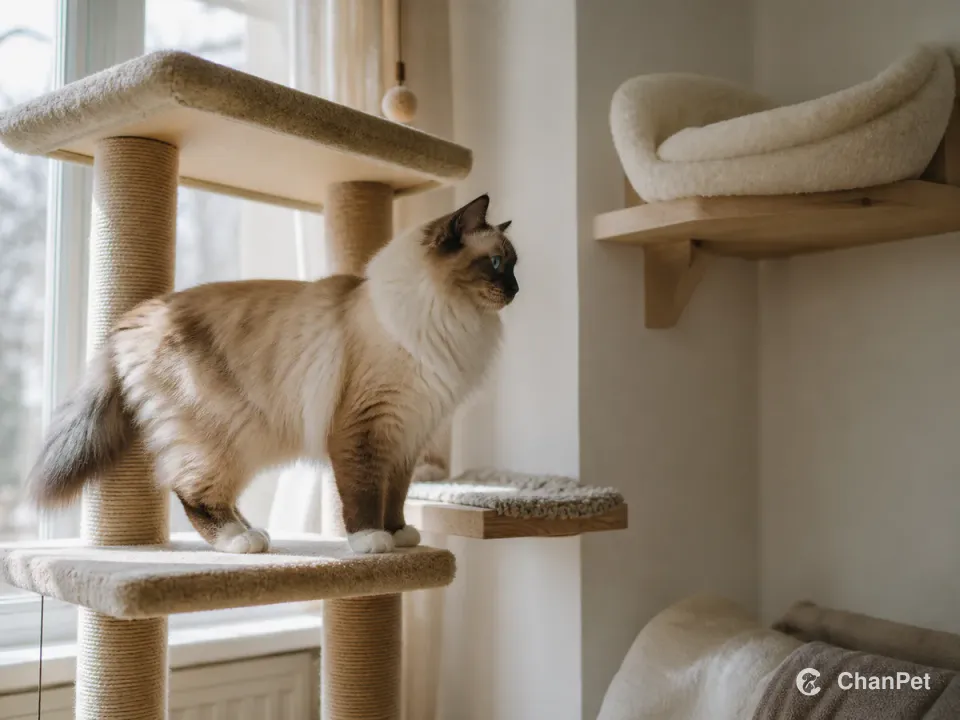
In a compact apartment, stable climbing furniture and shelves give a Ragdoll more routes to move and rest.[2][1]
An apartment can work when the layout works
Use the apartment in layers
The best apartment plan gives a Ragdoll a quiet floor-level retreat, a strong place to climb and an easy path between the two. Start with that route, then let furniture support it.[1][2]
Common questions
How much room does a Ragdoll need in an apartment?
What should I do if litter use changes after a move?
Keep the response calm. Review the box size, cleanliness and location, then arrange veterinary advice if the change continues or comes with other signs. House soiling can involve both environment and health.[3]
Sources
Sources used in this article
- [1]RagdollThe Governing Council of the Cat Fancy
- [2]Your Cat's Environmental Needs: Practical Tips for Cat CaregiversFeline Veterinary Medical Association and International Cat Care
- [3]Feline Behavior Problems: House SoilingCornell University College of Veterinary Medicine, Cornell Feline Health Center