Start with one safe room, not the whole house
A ferret can turn a normal room into a route map in minutes. Look below the sofa, behind appliances, around recliners and at every gap near an exterior door. NC State advises using enclosure openings that keep a ferret from getting its head caught. Apply that same care to the room where it will play.[1]
Choose one room you can close, clear the floor, protect cords and block places where you could not retrieve the animal. Then use that room consistently. RSPCA recommends daily opportunities to explore and play, and a small safe area is much easier to supervise than a loosely opened home.[2][1]
Teach play without turning hands into toys
Ferrets are built for fast, physical play. They chase, dart and use their mouths to investigate. Merck notes that even young ferrets have very sharp teeth and may bite as part of play. Use tunnels and safe toys for the exciting part of a game, then give the ferret a calm break.[3][2]
Watch for a change in the mood. RSPCA lists hissing, hiding, fleeing, screaming and biting as signs worth taking seriously. Stop the game, give the animal space and check the setup. You will learn more from that pause than from trying to win a wrestling match with a small predator.[2]
Find help before you need help
Ferrets benefit from clinicians who know the species. Merck recommends identifying both routine and after-hours care before illness or injury happens. Save the number, route and transport plan while everything is calm, not after a late-night change in appetite or behavior.[3]
During the first few weeks, keep a plain note of meals, water, toilet habits and active periods. That takes little time and gives a veterinary visit some useful context. It also helps a new owner notice the difference between a long nap and a true change from the ferret's usual day.[3][1]
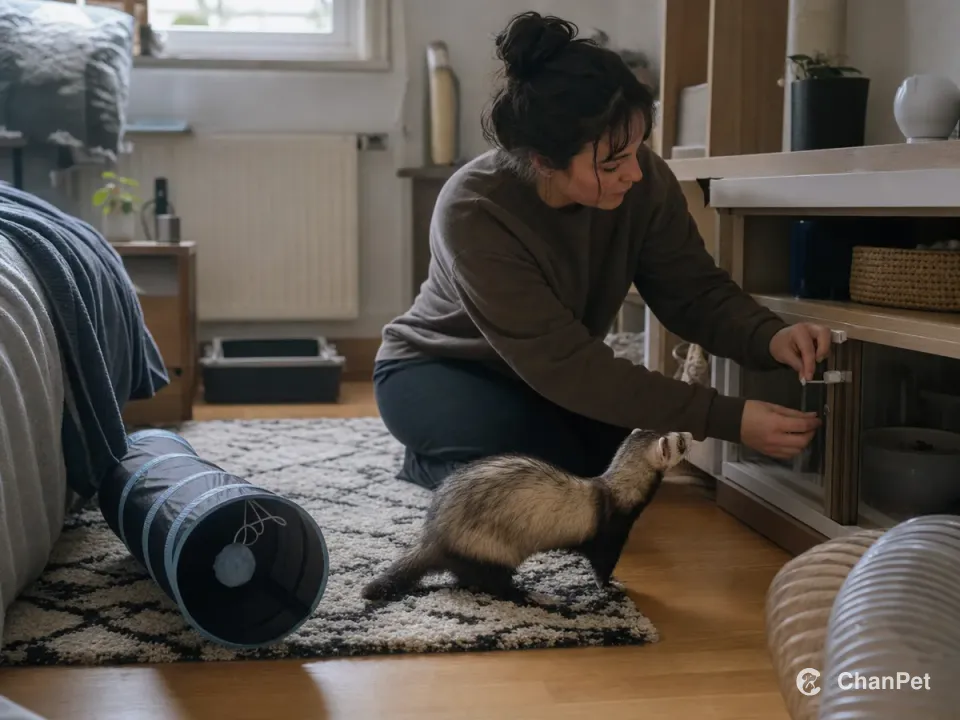
Check latches, gaps and removable hazards before letting a ferret explore the room.[2][1]
Make free time an appointment
Your first skill is building a safe ordinary day
A good start looks plain: one proofed room, a regular free-time slot and a veterinary contact saved in advance. Once those are normal, you have room to enjoy the strange little games that make ferrets so appealing.[3][2]
Sources
Sources used in this article
- [2]Keeping Your Pet Ferret Happy & HealthyRSPCA
- [3]Routine Health Care for FerretsMerck Veterinary Manual
- [1]Caring for Your Pet FerretNC State College of Veterinary Medicine