Let the first walks teach you
Your first walks can stay close to home. Check the temperature, choose shade, and leave a simple route back to the front door. A Frenchie does not need to prove anything on day one. It needs a person who notices when the pace feels easy.[1][2]
Once you are home, watch how the dog settles. Learn its usual breathing after a calm outing. A change is easier to explain to a veterinarian when you have seen the ordinary version many times.[2]
Make house rules short and kind
Start with three useful skills: pause at the door, turn back when called, and rest on a mat. Mark the moment your dog gets it right with food, play, or praise. Five good repetitions before dinner can teach more than a long, tense session.[3]
When jumping or chewing appears, make the next choice easier. Move the tempting item, offer an appropriate toy, and reward the calmer response. Reward-based training gives a beginner a clear job instead of a wrestling match.[3]
Put medical paperwork in one place
Ask for breathing assessments and past medical records before the dog arrives. The Royal Kennel Club also identifies several French Bulldog health tests. Save the records on your phone and take them to the first veterinary appointment.[1]
During the first week, make a short note about meals, bathroom trips, activity, and recovery after exercise. You are building a useful baseline, one ordinary day at a time.[2][1]
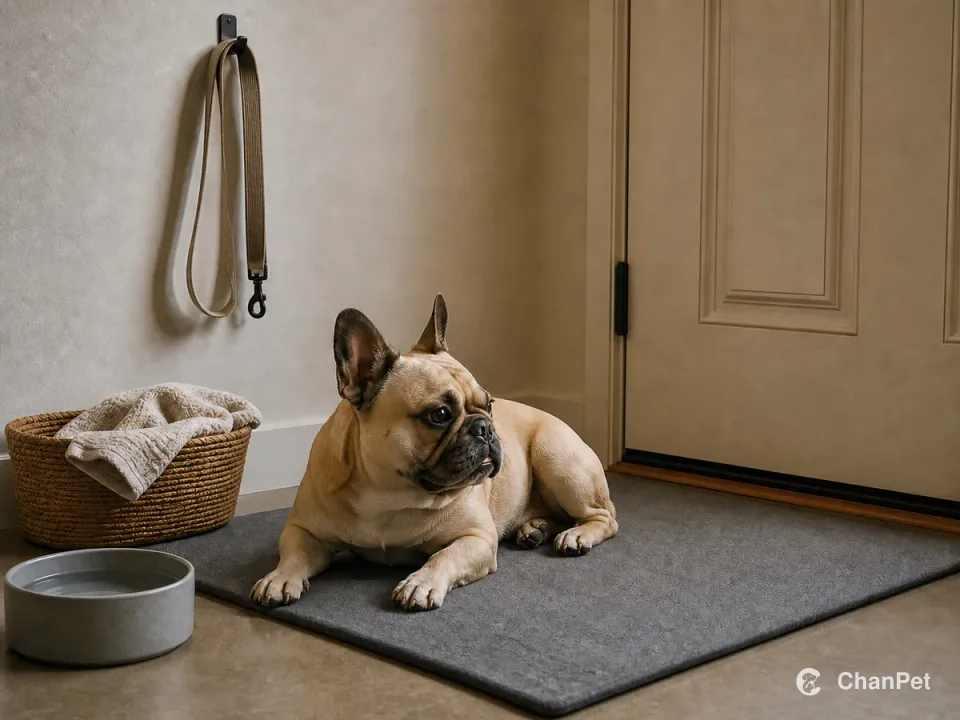
Choose a cooler, shorter outing, then give the Frenchie water and a shaded place to settle. That quiet recovery period teaches a first-time owner what normal breathing looks like.[1][2]
A good first dog for someone who pays attention
See whether your first-dog routine has enough room for a Frenchie
Use the smart match to put your climate, schedule, home, and preferred kind of companionship in the same view.[1][2]
Common questions
Should a new French Bulldog go on a long walk right away?
Do I need harsh corrections to train a Frenchie?
Reward-based training gives you a practical alternative. Teach the behavior you want, make the environment easier, and seek veterinary and professional help for ongoing behavior concerns.[3]
Sources
Sources used in this article
- [1]French BulldogThe Royal Kennel Club
- [2]Brachycephalic Obstructive Airway Syndrome (BOAS)Cornell University College of Veterinary Medicine, Riney Canine Health Center
- [3]Position Statement on Humane Dog TrainingAmerican Veterinary Society of Animal Behavior