Start with the animal, not the shopping list
A small-clawed otter can look like an energetic water-loving pet. Specialist material starts somewhere else: social groups, foraging, climbing, digging, calls and safety. A keeper has to read those behaviours before they can tell curiosity from distress or conflict.[1][2]
The Otter Specialist Group says that its authors and organisations do not support keeping otters as pets. The same guide warns that otters can inflict serious bites and need specialised knowledge. That is useful context, not an attack on anyone who finds them fascinating.[3]
A pool does not make a semi-aquatic habitat
The specialist standards cover land, water, dens, digging substrate, barriers and clean drinking water. Otters need to move between water, rest areas and other animals. A bathtub, balcony pond or temporary pen cannot become that linked environment.[2][1]
The work also continues after an enclosure is built. Group dynamics, temperature, cleaning, water quality, food opportunities and individual health all change over time. Specialist teams adjust care around those changes. A beginner household does not have that management base.[1][3]
Learn care skills with a better first animal
A first pet is a chance to build ordinary skills: noticing appetite, cleaning a safe space, reading when an animal needs distance and asking for help early. Pick an animal whose needs fit your home so you can practice those skills well.[3][1]
If otters interest you, follow species education, wetland projects and conservation work instead. When you choose a pet for your own home, use your actual time, space and support network as the starting point.[3][2]
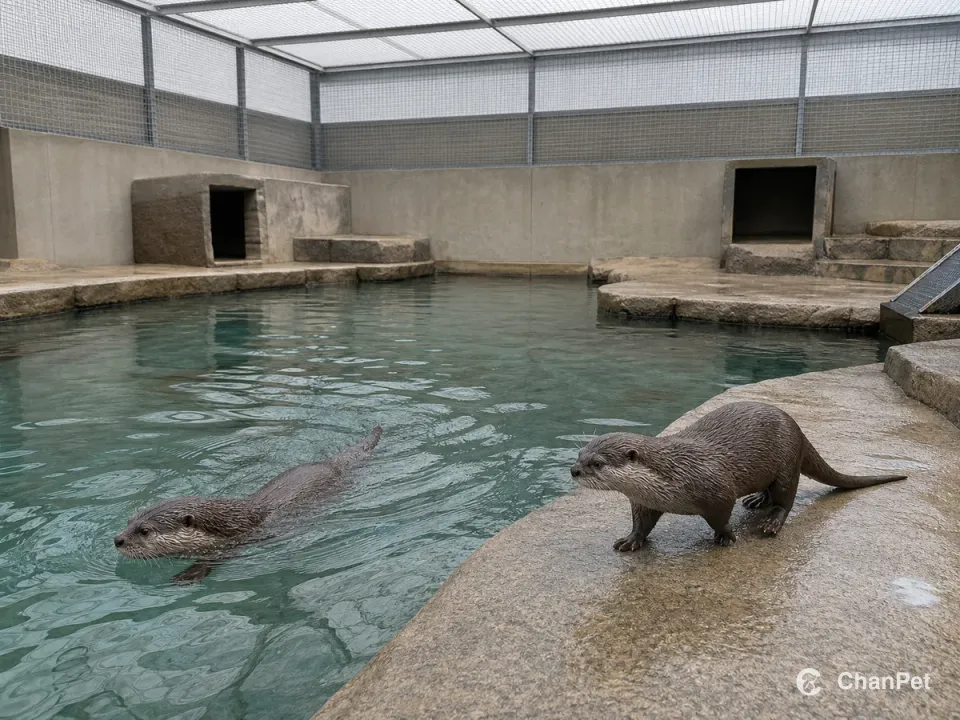
Water, land, shelters, and social space all need ongoing care; a pool and a few toys cannot provide the full system.[3][1]
A first pet should teach responsibility, not overwhelm it
Choose a first pet within your real capacity
Common questions
Sources
Sources used in this article
- [3]Caring for Asian small-clawed, Cape clawless, Nearctic, and spotted-necked ottersIUCN SSC Otter Specialist Group
- [1]Caring for Selected Otter SpeciesIUCN SSC Otter Specialist Group
- [2]Minimum Acceptable Husbandry and Welfare Requirements of Captive Asian Small-Clawed OttersIUCN SSC Otter Specialist Group