Make watching the family activity
A ball python offers plenty to watch: a quiet exit from a hide, a drink, a careful climb or a long rest. Children can help read the thermometer and notice when the water bowl needs attention. That creates a real role without turning the snake into a toy.[1]
When the snake pulls into a tight ball or retreats to a hide, everyone steps back. RSPCA advises giving a royal python space when it seems stressed. A simple family rule helps children see that animal care includes waiting.[1]
Adults handle the food and the system
An adult should open the enclosure, handle frozen prey, clean waste and run the equipment checks. Children can stay nearby and watch, while the adult keeps the process calm and predictable. Clear roles also reduce sudden hands near the snake.[1]
A welfare study of ball python trade documented frequent gaps in shelter, water, substrate and hygiene. A family offers good care by protecting those everyday details, rather than bringing the snake out each time someone wants to meet it.[2]
Finish contact with handwashing
CDC advises washing hands after touching reptiles, their food or items in their habitat. Build the route into the home: watch or help, step to the sink, use soap and water, then move on to the next activity.[3]
CDC identifies young children, older adults and people with weakened immune systems as more likely to become ill from germs reptiles can carry. If someone in your home falls into one of those groups, talk with their clinician before choosing a reptile.[3]
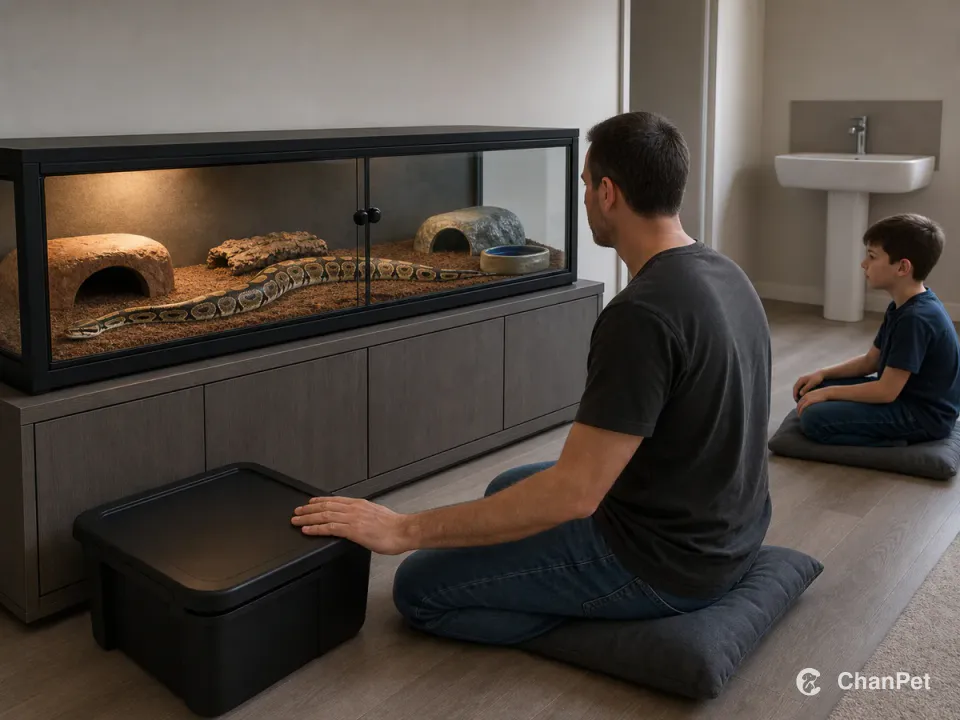
The child observes through closed glass while the adult owns the door and cleanup kit; handwashing follows after the family leaves the observation area.[1][3][2]
Choose a shared project with adult ownership
Clear roles make the family experience calmer
Want to know whether a ball python belongs in your household? Start a smart match and include children's ages, hygiene routines and adult care time.[1][3]
Common questions
Can children hold a ball python?
An adult should decide based on the snake's condition. Children learn plenty by observing and by respecting the animal's need for space.[1]
What hygiene rules should a family use?
Keep reptile supplies away from food preparation areas and wash hands after contact with the snake, food or habitat items. Adults help younger children complete the routine.[3]
Sources
Sources used in this article
- [1]How To Care For a Royal PythonRSPCA
- [3]Reptiles and AmphibiansCenters for Disease Control and Prevention
- [2]Dropping the Ball? The Welfare of Ball Pythons Traded in the EU and North AmericaAnimals