Give the cat one place that stays calm
Choose a bed, shelf or quiet room where children leave the cat alone. Explain that the spot belongs to the cat, even when it looks cute curled up there. A protected resting place gives a cat a way to step away before it feels crowded, and it gives adults a simple rule to enforce.[1]
The British Shorthair standard describes body and coat, including the golden shaded pattern. It cannot predict how one cat handles a lively kitchen, running feet or a new baby. Meet the cat, watch its signals and arrange the home around its comfort rather than the photo that made the family fall in love.[2][1]
Make contact an invitation
Show children how to sit nearby and let the cat choose the distance. Gentle strokes along the back work better than grabbing, lifting or following a cat that has walked away. Adults should stay close during early interactions, especially while everyone is learning each other's signals.[1][3]
Teach one simple rule: paws, tail, ears and food belong to the cat. A child can toss a toy along the floor or help refill water with an adult. Those jobs invite connection without turning the cat into a game. They also make it easier for adults to step in before play becomes rough.[3][1]
Keep health and hygiene in adult hands
Adults should handle litter cleaning, medicines, nail care, feeding changes and veterinary decisions. Keep the litter area away from food preparation, and make handwashing part of the routine after litter, cat supplies or play. These habits protect the household and keep care consistent when children's interest rises and falls.[3]
Keep a short family note with the feeding plan, carrier location and veterinary contact. A calm-looking British Shorthair can still feel unwell or stressed. The adults who know the usual eating, resting and litter patterns are the people best placed to spot a change and ask for help early.[1][2]
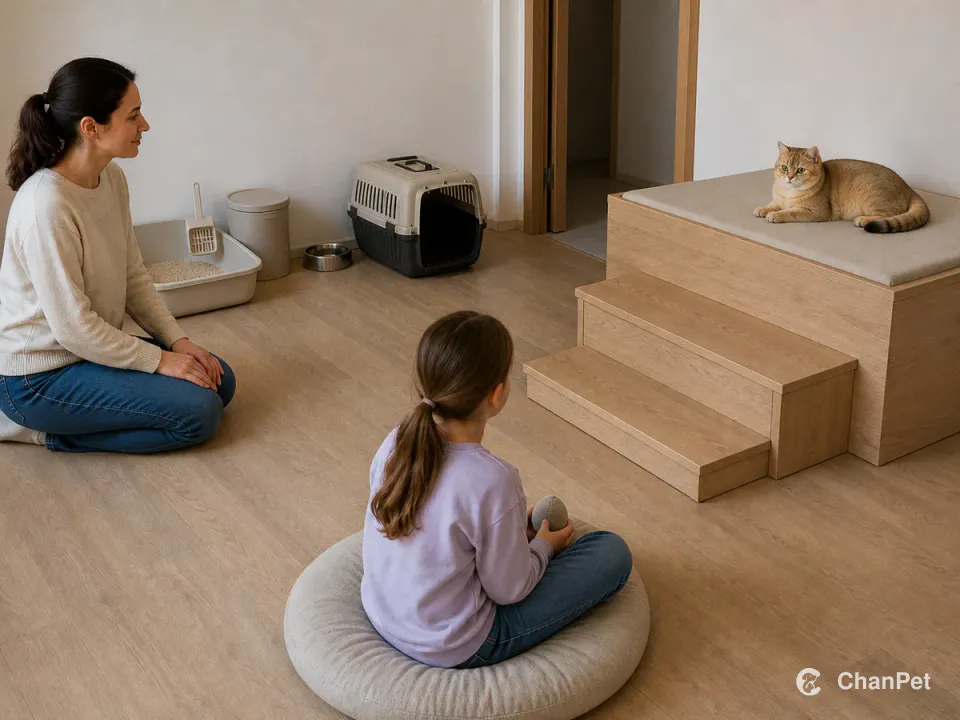
The adult owns hygiene and health care, the child waits for the cat to approach, and the stepped retreat remains the cat's choice.[2][3][1]
A family cat needs an adult care team
Make the rules easy for everyone to remember
Give the cat a quiet retreat, keep contact gentle and make adult care visible. Those simple rules help a golden shaded British Shorthair share family life while still having a predictable place of its own.[3][1]
Common questions
What can a child safely do to help with a cat?
Sources
Sources used in this article
- [2]British Shorthair Show StandardThe Cat Fanciers' Association
- [3]CatsCenters for Disease Control and Prevention
- [1]Choosing and Caring for Your New CatCornell University College of Veterinary Medicine, Cornell Feline Health Center