Teach one gentle way to say hello
Ask children to sit down, hold out a hand and wait for the cat to choose contact. Use a toy for play instead of fingers. When the cat walks toward a perch, bed or another room, children should let that choice stand.[1]
The tortoiseshell pattern reflects feline coat-color genetics. It does not tell you whether this cat likes a loud playroom, a toddler's hug or a guest arriving at the door. The cat's own response should set the pace.[2][1]
Give the cat an uncontested place
Choose a high perch, a bed behind a gate or a room with a closed door for quiet time. Tell children that the spot belongs to the cat. A protected resting place gives the cat a way to take a break before it feels cornered.[1]
Adults can help children notice the early signs of a cat asking for space: leaving the room, turning away or choosing a hiding spot. A small pause at that moment keeps an interaction friendly and helps children practice attention rather than chasing.[1]
Keep care and hygiene in adult hands
Adults need to own the food plan, litter work, health records, appointments and decisions about a concern. A child can help choose a toy or refill water under supervision. The essential jobs should never depend on a child remembering them.[1][3]
Keep the box out of food-preparation and children's play areas. Wash hands after litter work or handling cat supplies, and before eating. These simple habits make a shared home safer for everyone.[3]
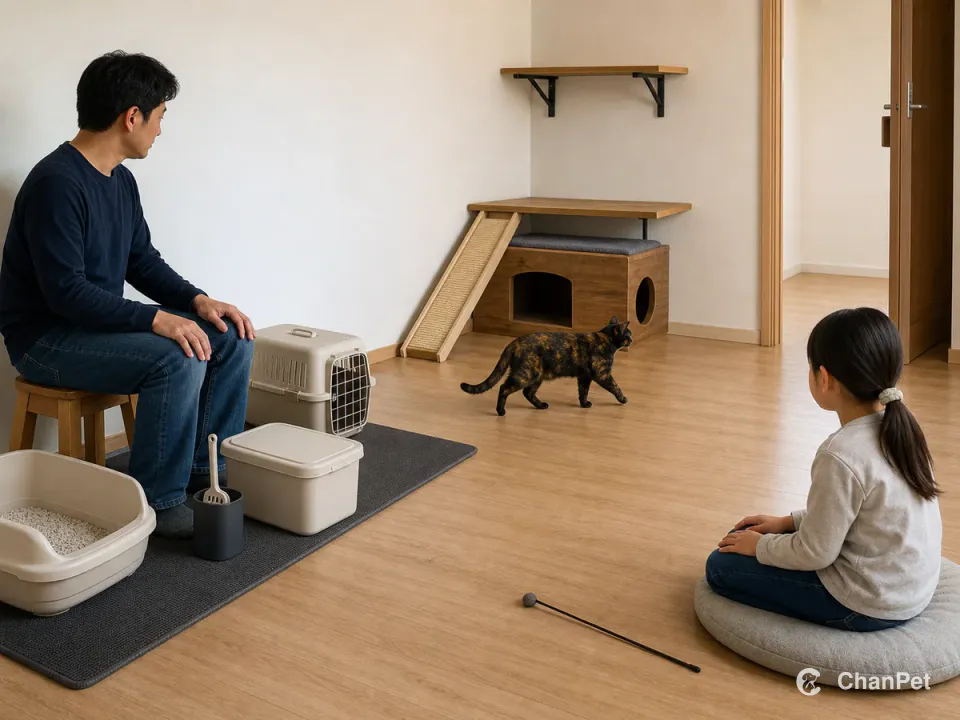
Tortoiseshell describes the coat. The adult handles food, litter, hygiene, and veterinary decisions; the child waits with hands on knees, while the cat keeps a high perch and open retreat.[2][3][1]
Family life needs a cat who can step away
Respect grows from small daily rules
Use toys, allow the cat to leave and keep the serious care jobs with adults. Those habits help a tortoiseshell cat feel safer in a lively family home.[3][1]
Common questions
How should children approach a new cat?
Have children sit down, offer a hand and wait for the cat to come closer. Use a toy for play and let the cat leave whenever it chooses.[1]
Who should take care of the litter box?
An adult should remain responsible for the litter routine and veterinary choices. Everyone should wash their hands after contact with the cat or its supplies and before eating.[3]
Sources
Sources used in this article
- [2]Feline Coat ColorUniversity of California, Davis Veterinary Genetics Laboratory
- [3]CatsCenters for Disease Control and Prevention
- [1]Choosing and Caring for Your New CatCornell University College of Veterinary Medicine, Cornell Feline Health Center