Fund the repeated basics before the fun extras
Build the list around things you will use repeatedly: food, a safe walking setup, one or two activity toys, grooming tools, and a place for health paperwork. A calm budget starts with items that support daily care rather than a pile of novelty purchases.[1][2]
Separate regular purchases from needs that can arrive unexpectedly. Keep health checks, record review, and possible veterinary care visible in the plan, so one busy month does not hide the rest of the year's responsibilities.[1][3]
Track body condition with your hands and eyes
WSAVA's dog body-condition guide asks you to consider the ribs, waist, and abdominal tuck together. Observe in the same place every few weeks, then pair those notes with food, treats, activity, and veterinary guidance.[2]
A Border Collie's activity can change with weather, training, and family schedules. Keeping a simple record helps you notice a shift early and gives your veterinarian more context for a food or activity conversation.[2]
Ask for named health records before you commit
Ask a breeder for documents you can identify and save, rather than relying on a broad health promise. BCSA's health statement addresses hip evaluations and inherited eye concerns, with records tied to the individual dog.[1]
UC Davis describes a Border Collie test for trapped neutrophil syndrome, an inherited condition associated with a VPS13B variant. Clear test results and parent information give you useful material for a pre-purchase veterinary discussion.[3]
List food, activity tools, grooming, health records, and a veterinary reserve separately. A local estimate is easier to adjust when each long-term responsibility has its own line.[1][3][2]
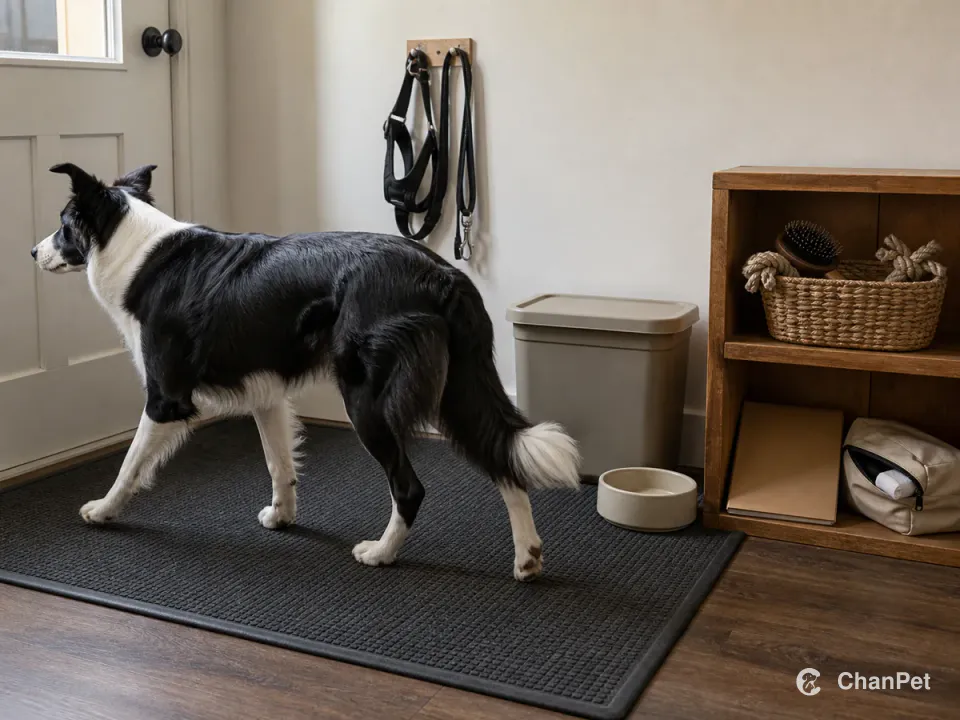
Daily care, a consistent side view for body checks, secure walking gear, health records and emergency readiness keep the long-term baseline visible.[1][3][2]
Use a long-term list before deciding the budget fits
Put documents and reserves on the list before bringing a dog home
Review the health records, then sketch recurring care and an adjustable veterinary reserve. When the list can be shared with household members and a veterinarian, the financial decision becomes easier to discuss.[1][3]
Common questions
Which health records should a budget-minded Border Collie buyer request?
How can I keep an eye on body condition at home?
Look and feel for the ribs, waist, and abdominal tuck in a consistent setting. Keep those observations with activity and food notes, then bring meaningful changes to your veterinarian.[2]
Sources
Sources used in this article
- [1]BCSA Health StatementBorder Collie Society of America
- [3]Trapped Neutrophil Syndrome (TNS) in Border ColliesUniversity of California, Davis Veterinary Genetics Laboratory
- [2]Body Condition Score: DogWorld Small Animal Veterinary Association