Treat walks like a regular appointment
A Shiba Inu needs safe outdoor time that does more than cover a bathroom break. Plan a reliable route where the dog can move, sniff, and spend time with you. Keep a shorter version ready for busy days.[1]
The return home can stay simple: hang the leash, wipe paws, offer water, and let the dog settle. When these steps happen in the same order, they take less mental effort on a tired evening.[1]
Catch loose fur before it spreads
The Shiba's double coat sheds heavily at certain times of year. Keep the brush close to the place where the dog relaxes, then use brief sessions often. Early brushing is easier than rescuing a sofa full of fur.[1]
Put vacuuming and washing dog blankets on the calendar during shedding season. A scheduled cleanup feels smaller than a last-minute reset after the floor and furniture have already filled up.[1]
Give food notes one home
WSAVA recommends a complete dietary history when assessing an individual dog. Keep food, treats, appetite, and activity changes in the same note. It gives you a useful record before a routine veterinary visit.[2]
A phone note is enough. Add the date when food changes, save a photo of the label, and write down unusual appetite. Small records reduce the guesswork when you need advice.[2]
Build alone time slowly
Time alone takes practice, even for a dog with an independent streak. RSPCA advises building absences in small steps and checking the dog's response before making the next one longer.[3]
Use a camera on occasion to see whether the dog settles after you leave. Pacing, vocalizing, or chewing mean the step is too hard. Shorten the absence and try an easier version later.[3]
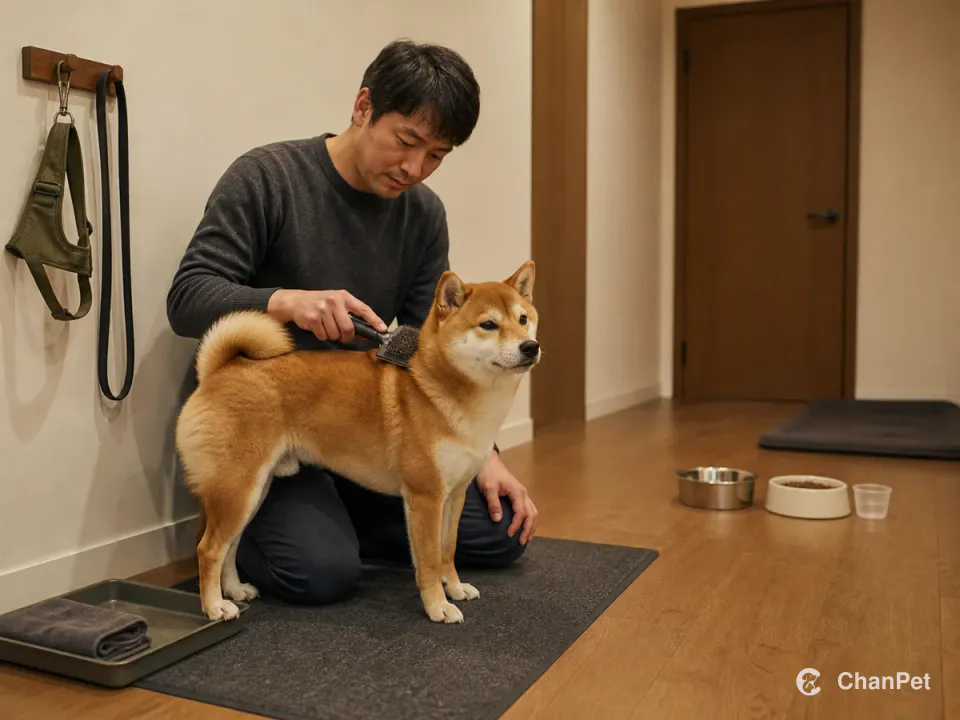
After the walk, brush for two minutes, check the paws, refresh water, and return to the same rest place; one clear route makes the small jobs repeatable.[1][2][3]
The easier Shiba home keeps small jobs visible
Put the repeating jobs on one weekly list
List walks, brushing, laundry, food notes, and alone-time practice beside your usual commitments. The Shiba routine becomes easier to judge once all those small jobs are visible.[1][2][3]
Common questions
Does a Shiba Inu need regular brushing?
Yes. The double coat brings loose fur, especially during shedding periods. Brief regular brushing helps you remove it before it collects across the home.[1]
How should I begin alone-time practice?
Start with a short absence the dog can complete comfortably. Watch the response, then add time gradually after the earlier step feels settled.[3]
Sources
Sources used in this article
- [1]Shiba Inu Dog Breed InformationAmerican Kennel Club
- [2]WSAVA Global Nutrition GuidelinesWorld Small Animal Veterinary Association
- [3]How to Train Your Dog to Stay Home AloneRSPCA