Your course list leaves out the dog
The semester often looks manageable before it starts. Then a lab runs late, a group project lands, someone suggests dinner, and the evening disappears. A Shiba Inu still needs a secure outing and a recognizable routine.[1]
Use the week that goes sideways as your test. Who takes the morning walk before an early class? Who has the key during a late shift? Who knows the door routine when you are sick?[1]
Build alone time before deadlines pile up
A dog does not learn to settle alone because your workload suddenly grows. RSPCA recommends small, gradual absences with attention to the dog's response. That work belongs in a calmer part of the term.[2]
A camera can show whether the Shiba paces, vocalizes, or chews after you leave. If the dog struggles, shorten the absence and return to an easier step. Solve it before exam week makes everything harder.[2]
Let training live in small gaps
Keep training inside things you already do. Ask for a pause before the door opens, reward a check-in on the walk, or practice settling while coffee brews. Those quick repetitions hold up when assignments arrive.[3]
Talk through the words and rewards with roommates before the dog moves in. AVSAB supports reward-based teaching, and a shared plan keeps one person's shortcut from confusing the dog.[3]
Give every break a real address
Write down where the Shiba will live during each break, how the dog gets there, and who pays for the care. A possible favor is different from a person who has agreed and practiced the routine.[1]
Let the backup carer meet the dog before a crisis. Share the feeding notes, usual walk, harness location, and door routine. A familiar handover serves both the person and the Shiba better.[1][2]
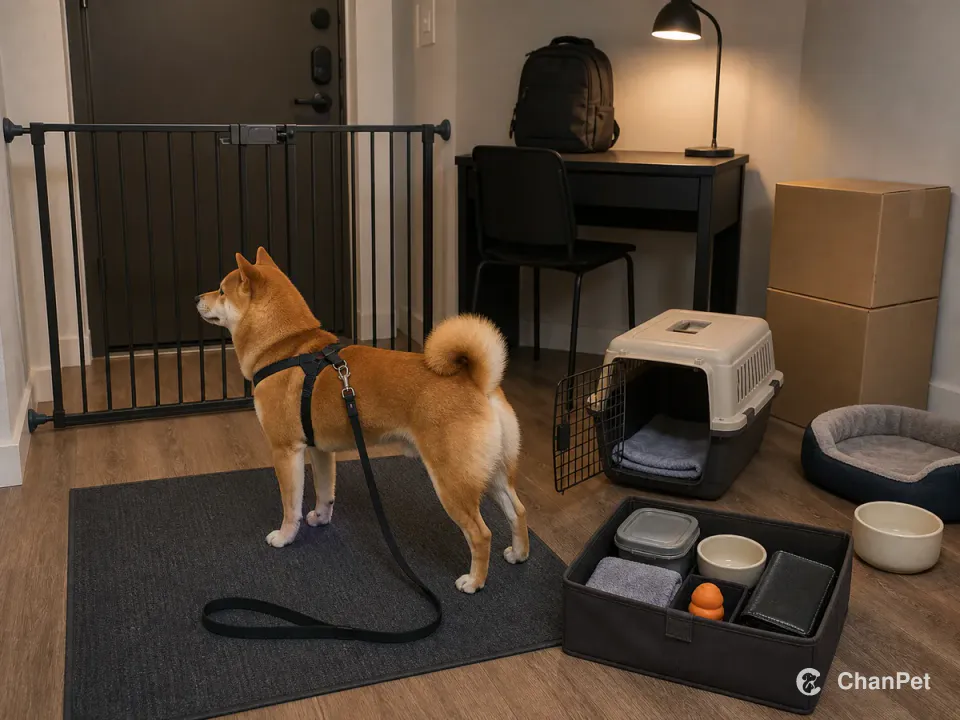
Leash waiting happens inside the closed gate, while a fixed care tote, carrier and moving supplies keep the same routine available through hard weeks, housing changes and handoffs.[1][2][3]
A Shiba needs a plan that reaches beyond campus
Put the dog on the same calendar as your exams
Mark lectures, deadlines, trips home, and move-out dates. Then add the person who covers each gap. A plan feels real once each difficult day has a name beside it.[1][2]
Common questions
Can a Shiba Inu stay alone while I am in class?
Build comfortable alone time before relying on it for a class day. Watch the dog's response and add time gradually after earlier sessions go well.[2]
How can roommates support Shiba Inu training?
Agree on a few cues and rewards, then use them the same way. Shared reward-based practice gives the dog clearer information about what each person expects.[3]
Sources
Sources used in this article
- [1]Shiba Inu Dog Breed InformationAmerican Kennel Club
- [2]How to Train Your Dog to Stay Home AloneRSPCA
- [3]Position Statement on Humane Dog TrainingAmerican Veterinary Society of Animal Behavior