Keep fur on a short leash
British Shorthairs have a short, thick coat rather than a long flowing one. That makes grooming straightforward, but it does not make loose hair disappear. Brush a little more often while the coat moults, and keep a vacuum or lint tool close to the chair and bed the cat uses most.[1]
A small brushing routine has another benefit: it gives you a chance to notice changes in the skin, coat or comfort with handling. Keep the session brief and end on an easy note. A relaxed cat is more likely to accept the brush again tomorrow than a cat that has been held through a long clean-up.[1]
Let the litter area do its job
Put the litter box in a quiet, accessible location and keep it away from food and water. Cornell explains that a cat's toilet habits can change with box cleanliness, location, litter, household stress or medical issues. The place you choose matters as much as the box you buy.[2]
Scoop daily, wipe the surrounding floor when needed and wash hands after litter or cat supplies. CDC also recommends keeping the litter area away from food preparation. A mat at the exit catches some tracked litter before it reaches the part of the home where you want bare floors and quiet mornings.[3]
Make the evening feel settled
British Shorthairs are often less vocal than some breeds and can be comfortable sharing a calm room. Give the cat a predictable evening anyway: a short play session, a chance to scratch, and a familiar place to rest. The goal is a home where the cat has a useful way to spend its awake time.[1]
If a new odor appears or litter behavior changes, look at the setup instead of covering the room with fragrance. Check the box, the route to it and the cat's comfort, then seek veterinary advice when a health issue could be involved. The change itself is more useful than the smell you are trying to hide.[2][3]
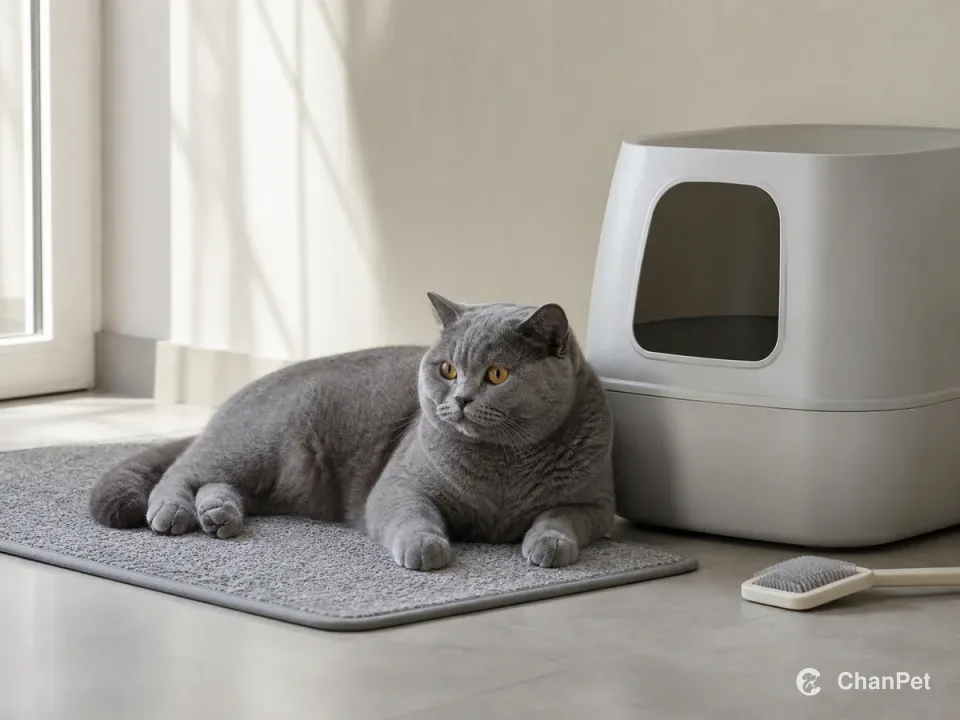
Put the litter area and grooming tools where they are easy to clean, and hair and everyday odours stay easier to manage.[1][2]
A clean home comes from visible care
Keep the routine out in the open
Place litter supplies where they are easy to use, keep a brush near the cat's favorite chair and give the cat a calm evening ritual. A British Shorthair can bring quiet company without asking you to ignore the ordinary cleaning work.[1][3][2]
Common questions
How can I reduce litter odor without bothering the cat?
Are British Shorthairs quiet at night?
Many are described as calm and less talkative, yet every cat has its own activity pattern. A predictable evening with play, food and a comfortable resting place helps you see what your individual cat needs.[1]
Sources
Sources used in this article
- [1]BritishThe Governing Council of the Cat Fancy
- [3]CatsCenters for Disease Control and Prevention
- [2]Feline Behavior Problems: House SoilingCornell University College of Veterinary Medicine, Cornell Feline Health Center