Adults set the rules before children meet the dog
The first family rule is simple: adults watch every child-and-dog interaction. That means an adult steps in before a child climbs over a resting dog, follows it into a corner, or turns a toy into a tug-of-war argument. The dog gets a quiet place where children never follow.[1][2]
Teach children what an invitation looks like. A loose dog who comes closer may want contact. A dog that turns away, freezes, licks its lips, or leaves needs room. Responding to those signals teaches the household that the dog has a voice without needing to make a scene.[2]
Make helpful child jobs small and clear
A child can refill a measured water bowl with an adult, scatter a few treats for a search game, or help notice when the dog chooses its bed. Adults keep the leash, food decisions, grooming tools, cleaning, medications, and veterinary contact in their own hands.[1][2]
Use the same reward words across the household. If “bed” earns quiet praise from one adult and becomes a game for another child, the dog has to decode too many rules. A brief family conversation before the dog arrives prevents a surprising amount of friction later.[2]
Health and hygiene stay with the grown-ups
CDC dog guidance includes handwashing after contact with dogs and their supplies. Make that part of coming in from the yard, cleaning a bowl, and dealing with waste. It is a household habit, not a punishment for children who want to help.[1]
Keep the dog's health papers in one place and let one adult own the appointment calendar. Research based on owner-reported health histories highlights how much useful information is built from steady notes. A family can collect observations; an adult should decide when to call the veterinary team.[3][1]
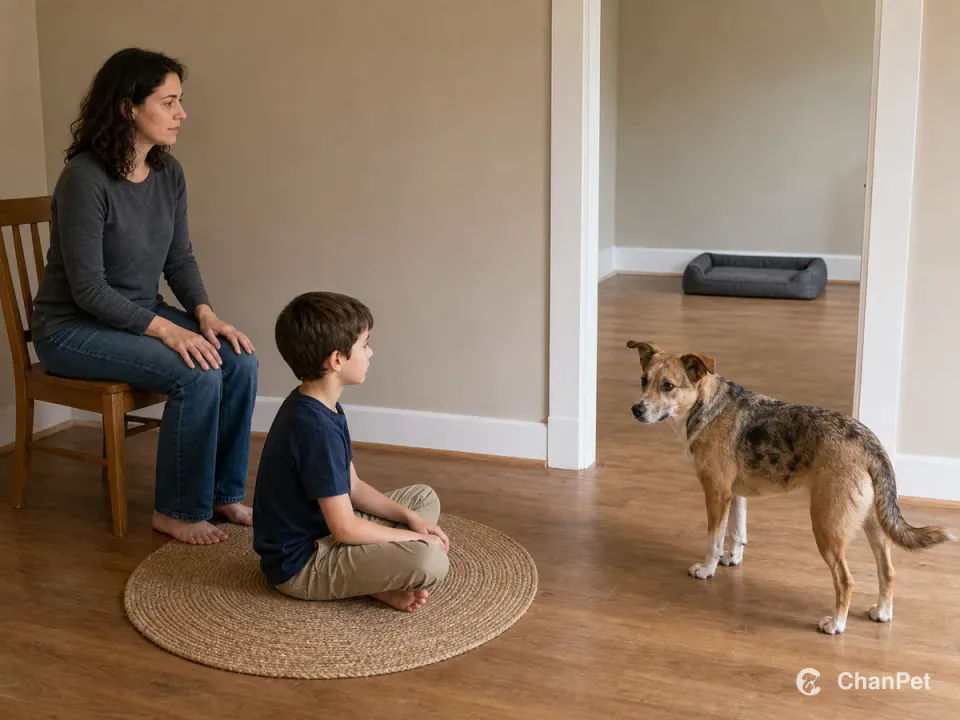
The adult leads the observation, the child keeps both hands on their knees, and the dog can retreat to its bed before the next interaction.[1][2][3]
The family fit is built around supervision, not a cheerful label
Let the dog have a safe way to say “enough”
Build quiet space, clear adult responsibility, calm child jobs, and one shared training language. That gives family life room for both kindness and ordinary dog behavior.[2][1]
Common questions
What can children safely do to help with a family dog?
How do we know when a dog wants a break from children?
Watch for turning away, freezing, lip licking, moving off, or choosing its resting space. Stop the interaction and give the dog room. Adults should make that response predictable for every child in the home.[2]
Sources
Sources used in this article
- [1]DogsCenters for Disease Control and Prevention
- [2]Position Statement on Humane Dog TrainingAmerican Veterinary Society of Animal Behavior
- [3]Lifetime prevalence of owner-reported medical conditions in the 25 most common dog breeds in the Dog Aging Project packGeroScience