Quiet and clean are routines, not breed promises
The Rottweiler's coat is short, hard and dense, which can make grooming more straightforward than it is for a long-coated dog. It still brings hair, damp paws, outdoor dirt and the need for regular handling into the home. A quiet, clean household works best when these are expected parts of life rather than surprises that create frustration with the dog.[1][2]
The aim should not be a showroom home. It should have a safe place for the dog to rest and a routine for cleaning. There should be no need to scold the dog for normal evidence of living outdoors. A mat by the entrance, accessible towels and a place for grooming tools reduce small conflicts before they start.[2][3]
Treat sound as information, not a personal insult
No responsible guide can promise that an individual Rottweiler will be quiet in every home. Doorbells, people in a corridor, unfamiliar noises and time alone can all change a dog's behavior. The useful question is what happens after the sound: can the dog return to you, settle in a separate space or recover once the event has passed? Those are skills that can be practiced kindly.[1][4]
Barking, whining, pacing, toileting indoors or damage when left alone may be signs that a dog is distressed rather than disobedient. The RSPCA recommends gradual alone-time training and advises owners not to punish behavior that happened while they were out. If sound is a recurring problem, video can help you understand the pattern and decide whether to adjust the routine or seek professional support.[4]
Use a small cleaning routine that the dog can tolerate
Build grooming into ordinary contact instead of saving it for a difficult session. Brief brushing, checking paws after a walk, and calmly touching ears, nails and the underside of the body make it easier to notice changes. The RSPCA recommends introducing grooming equipment and environments gradually with reward-based methods, so the dog has a chance to learn that care is safe.[2]
If a dog suddenly resists a familiar brush, towel or body check, do not assume it is being stubborn. Stop, look for signs of pain or sensitivity, and ask a veterinarian for advice when needed. A clean home is not worth turning necessary care into a fight.[2][3]
Keep hygiene close to the moments that create mess
The CDC recommends handwashing after touching dogs, their food, bowls, waste or supplies, and before eating or preparing food. Put supplies where the actions happen. Keep bags and gloves by the door, soap by the sink, and bowls and food in a clear storage area.[3][5]
Pick up waste promptly and clean indoor urine, feces or vomit without delay. These tasks are not glamorous, but they protect the household and make the dog's living area more pleasant. A person who wants a very clean home should decide in advance who will do them during illness, travel or a long workday.[3][5]
Avoid the blame cycle
A household can make a dog noisier and messier by treating every normal dog behavior as a failure. Repeated shouting at barking, rushing the dog through grooming or sending it away whenever it is inconvenient can add anxiety without teaching a useful alternative. Calm management works better: give the dog a resting place, reward quiet behavior, meet outdoor needs and change the setup when a trigger is predictable.[4][2]
That does not mean ignoring a persistent problem. A sudden change in odor, appetite, toileting, movement or comfort deserves attention. The cleaner and calmer the routine is, the more likely you are to notice that something is different rather than dismissing it as part of the usual household mess.[3][2]
A workable quiet-and-clean plan includes
- A resting place where the dog can recover from activity and visitors without being disturbed.
- A gradual plan for time alone, with observation instead of punishment if the dog struggles.
- An entrance routine for paws, lead storage, towels and waste bags.
- Regular gentle grooming and body checks rather than occasional forced sessions.
- Handwashing and prompt cleanup built into the household's normal food and cleaning routines.
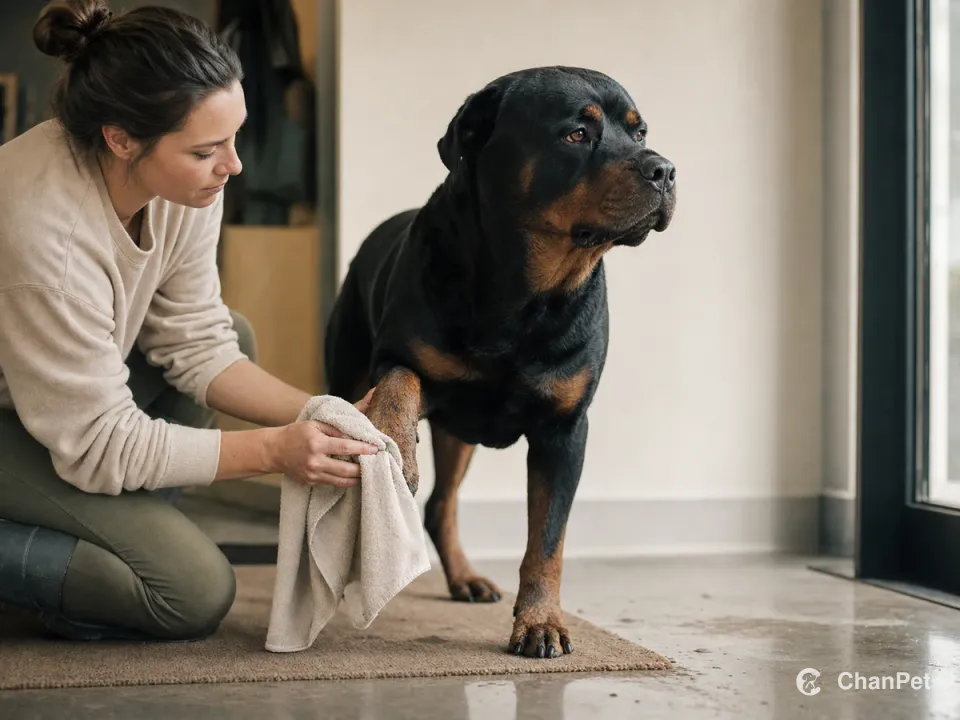
Cleaning at the moment a dog comes home is easier to sustain than a weekend rescue.[2][5]
Choose the dog only if you can live with the real version
A Rottweiler can be comfortable in a tidy, peaceful home when the people there expect regular care and respond calmly to change. A home that needs absolute silence, hair-free floors and no cleanup time is better without a dog. The fair question is whether your routine makes ordinary dog life manageable for everyone.[1][4][2][3]
See how the home would feel
Want a quieter, cleaner home with a dog? Put your cleaning routine, activity times and living setup into the match. It shows whether a Rottweiler fits the home you want.[2][3]
Common questions
Does a Rottweiler's short coat mean there will be no hair around the home?
What should I do if the dog barks or destroys things when left alone?
Do not punish the dog when you return. Observe the pattern, reduce the difficulty of alone time and seek qualified support if the dog appears distressed.[4]
Sources
Sources used in this article
- [1]FCI Standard No. 147: RottweilerFédération Cynologique Internationale
- [2]Choosing the Right Dog GroomerRSPCA
- [4]How to Train Your Dog to Stay Home AloneRSPCA
- [3]Dogs | Healthy Pets, Healthy PeopleCenters for Disease Control and Prevention
- [5]Hygiene Practices Around AnimalsCenters for Disease Control and Prevention