Plan the next move while you have time
Student homes change fast. Before you buy an enclosure, write down your next likely move and how the snake, equipment and substrate will travel. A ball python needs stable heat, ventilation and cover after the move, not a vague promise to sort it out later.[1]
Prepare a secure travel container before the packing starts. At the new address, restore the enclosure's heat and hides before you unpack books and clothes. A written order makes a move calmer for both you and the snake.[1]
Exam week still needs one small check
Ball pythons tend to be most active at dawn and dusk, while much of the day can pass quietly under cover. During exam week, keep a short daily check for heat, water and the enclosure latch. That matters more than finding a big block of playtime.[2][1]
Set one reminder that asks for readings, not guilt. You can glance at the enclosure, change the water if needed and write down anything unusual. The task stays manageable even when the rest of the day is packed.[1]
Choose a backup who can read the equipment
Before a break, show one named person the actual enclosure. They should know where the thermometer is, how the lid closes, when water changes and how to reach you. A person who has done the routine once can step in with much less uncertainty.[1]
The backup carer's main job is to preserve the habitat. Furnished terrariums support behaviors such as basking, climbing, bathing and burrowing. The snake gains more from a settled enclosure than from extra handling for a social-media update.[3]
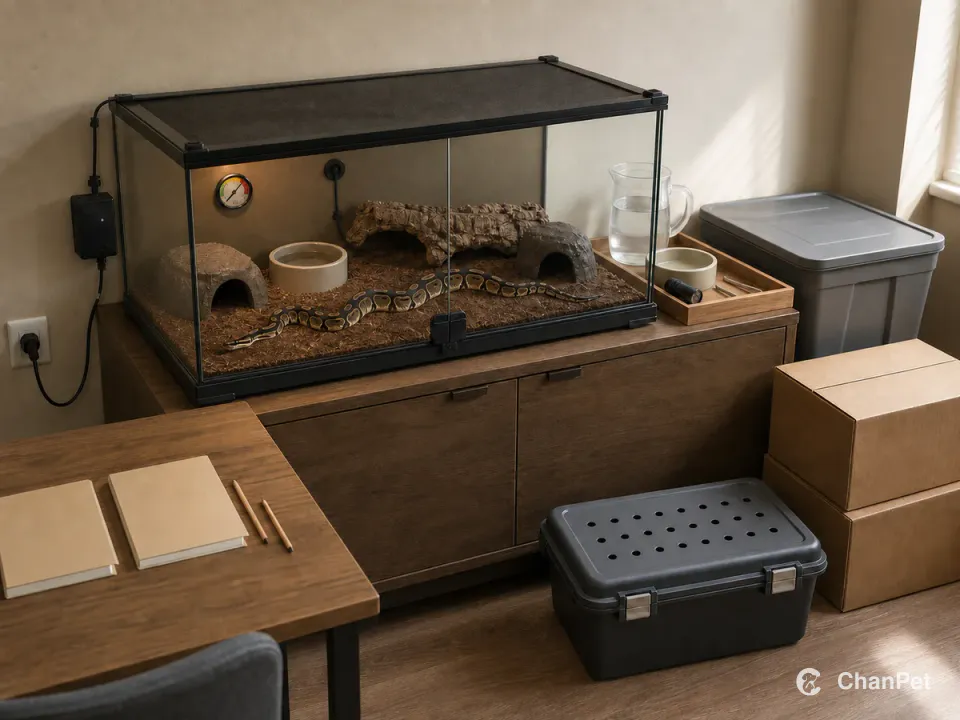
A fixed enclosure and sealed thermostat route protect the habitat, while the check tray, backup supplies, empty carrier, and moving boxes keep exams, breaks, and the next move inside one plan.[1][3][2]
Student life works when change has a backup plan
Put the difficult week and the next move on one page
Wondering whether your term leaves room for a ball python? Start a smart match and include housing, breaks and the person who can cover care.[1][2]
Common questions
Can I leave a ball python alone during exam week?
You can reduce handling, while the enclosure still needs daily checks for heat, water, the latch and obvious waste. The habitat keeps running while you study.[1]
Can a friend who has never kept a snake cover a break?
They can help after a hands-on walkthrough. Show them the daily checks, water routine and enclosure closure, then leave a clear way to reach you if something changes.[1]
Sources
Sources used in this article
- [1]How To Care For a Royal PythonRSPCA
- [3]Animal-appropriate housing of ball pythons (Python regius)—Behavior-based evaluation of two types of housing systemsPLOS ONE
- [2]Python regiusAnimal Diversity Web, University of Michigan