Plan around the hard week, not the easy one
A light first-week timetable can make a cockatiel seem easy. The harder test is an early class, a late lab, an assignment deadline and a weekend away in the same week. Put feeding, water changes, cage cleanup and quiet time on that version of the calendar before you commit.[1]
AAV says a single cockatiel benefits from attention from its human flock. That does not require you to entertain the bird every minute. It does mean the bird needs dependable contact and stimulation, rather than a long stretch of rushed care whenever the schedule briefly opens.[1][2]
Make the study space safe for both of you
A cockatiel can be near you while you study, but that is different from letting the bird explore an unchecked desk. Cords, open drinks, fans, hot food and a suddenly opened door can turn a normal study session into a hazard. Set up one safe perch or activity spot before the bird comes out.[1]
Give the bird a short, repeatable activity that fits the study block, then return it to a calm base before you leave. Enrichment research supports giving cockatiels chances to explore. A small routine you can repeat during exams is more useful than a complicated setup you only manage during breaks.[2][1]
Give one person the whole backup plan
A person who says they like birds is not automatically a backup carer. Choose someone who can visit, replace water, give the usual food, notice a change and follow the same safe-door routine. Show them the cage, supplies and avian-vet contact before you need to leave.[1]
Housing moves and shared kitchens add another reason to plan early. CDC advises washing hands after contact with birds or their supplies and before preparing food. Make that a house rule from the start, especially when roommates share counters and cleaning equipment.[3]
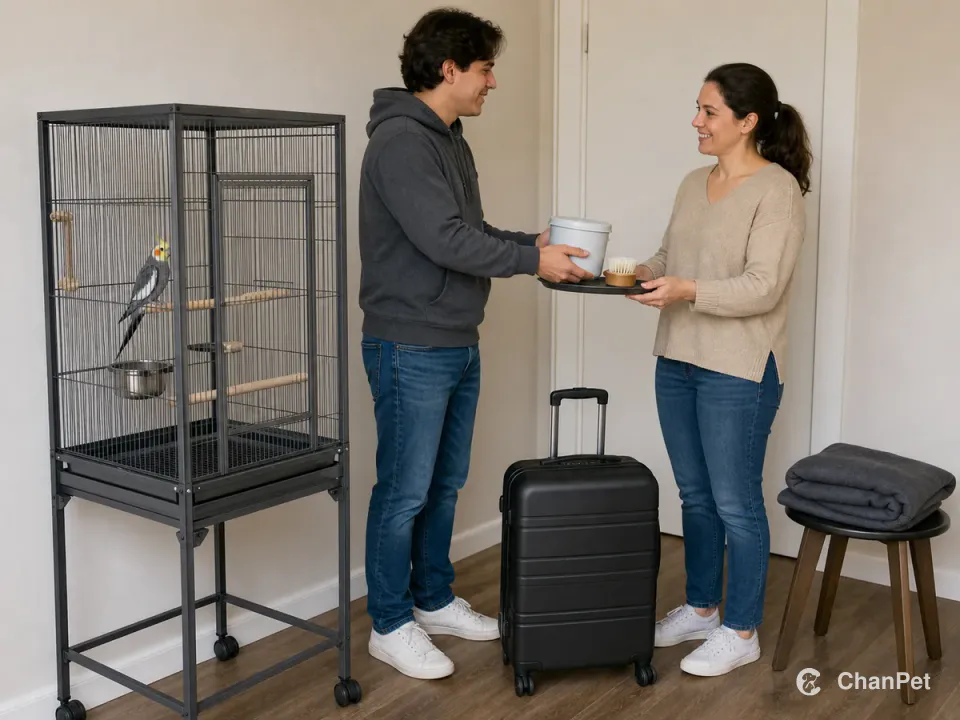
Before a break or move, the backup carer should take over feeding, cleaning and daily checks at the fixed cage location.[1][2]
Choose the bird when your life already has a care rhythm
Give the bird a routine that does not vanish at deadline time
The best test is ordinary life: a late class, a tired evening and a week when you need help. If care still fits then, the cockatiel has a better chance of feeling settled throughout the term.[1][2]
Common questions
Can a cockatiel stay in my dorm room while I am in class?
What should a backup carer know first?
Show one named person the food, water, cage routine, safe handling boundaries and avian-vet contact. They should know the bird's normal behavior well enough to flag a clear change.[1]
Sources
Sources used in this article
- [1]CockatielsAssociation of Avian Veterinarians
- [3]BirdsCenters for Disease Control and Prevention
- [2]Environmental enrichment on the behavior and welfare of cockatiels (Nymphicus hollandicus)Arquivo Brasileiro de Medicina Veterinária e Zootecnia