The spider will not be the loud neighbor
A jumping spider is a day-active visual hunter. It does not bark, run a wheel or call across the room. For a thin-walled apartment, that is a genuine advantage over many small mammals and birds.[1][2]
The quiet part is easy. The placement part deserves thought. Put the enclosure where it will not be bumped during meals, cleaning or visitors, and keep the basic care items nearby so the setup does not migrate around the apartment.[2][3]
Think up the wall, not across the floor
Larger Phidippus stages use shrubs, trees and even building walls in their natural setting. In a small enclosure, a stable climbing surface and a quiet upper corner matter more than empty floor area.[2]
That vertical habit changes opening day. A spider may be near the lid or tucked into a high silk retreat when you arrive to feed it. Stop and look first, then decide whether the enclosure needs to be opened at all.[2][1]
Make moving day boring on purpose
Before a move, decide how the enclosure will close, where it will ride and where it will land first. A small animal can be overlooked in a busy room. A named place at each stage is safer than an improvised carry.[2][3]
At the new address, set up the quiet corner before unpacking everything else. Give the spider time to orient itself to the enclosure it already knows. Curiosity can wait until the lid is secure and the room has settled down.[2][1]
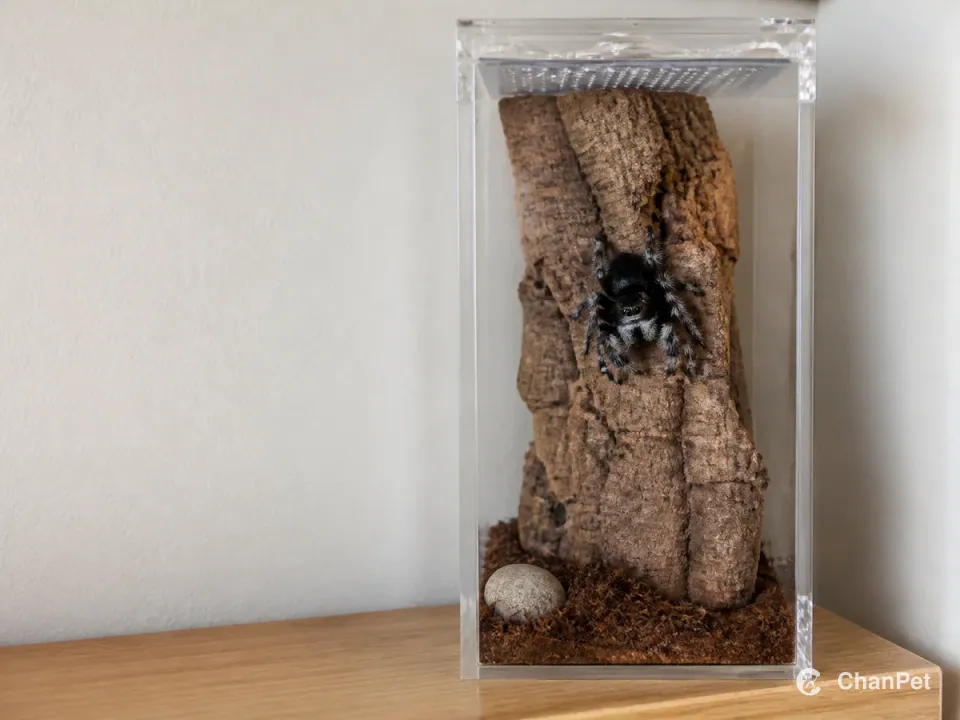
A fixed vertical enclosure gives the spider a settled place in a compact home.[2]
A small footprint only works with a fixed home
Choose the shelf before you choose the spider
Apartment care is straightforward once the enclosure has a secure, undisturbed home. One reliable spot and a careful opening routine do more for the spider than a larger collection of decorations.[2][1]
Sources
Sources used in this article
- [2]Regal Jumping Spider, Phidippus regius C. L. KochUniversity of Florida IFAS Extension
- [1]SpidersUniversity of California Statewide Integrated Pest Management Program
- [3]Jumping Spiders of KentuckyUniversity of Kentucky Department of Entomology