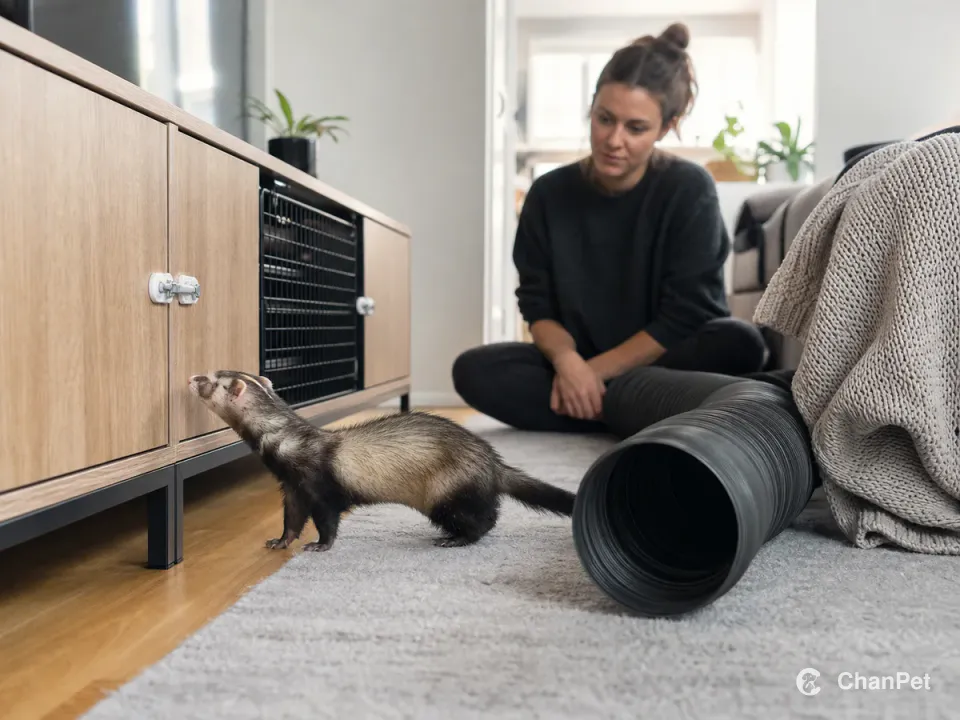
Short answer: Ferret is a stretch for apartment living — 2.9/5. The main catch: it hates being alone. Below, the per-metric score, monthly cost and a checklist help you decide.
Main watch-out: Ferrets are not low-maintenance cage pets; odor, social needs, training, vaccination/checkups and registration/local law can be gating issues.
Relatively easier: Noise 2/5.
✓Proceed if
You can close the main pressure gaps before setting an adoption date.
You can sustain this care setup: Ferret-proof rooms and cables, then plan sleeping areas, litter areas, daily exercise, a carnivore diet and exotic-vet access.
Household members, roommates, property rules, local legality and veterinary access are confirmed.
✕Pause if
This core risk cannot be accepted or managed: Ferrets are not low-maintenance cage pets; odor, social needs, training, vaccination/checkups and registration/local law can be gating issues.
Pressure points are unresolved: Cleaning load 4/5, Exercise need 4/5.
The budget covers purchase/adoption only, not medical care, emergencies, boarding or equipment replacement.
What to check before committing
Space pressurePlan for it
3/5
NoiseEasier
2/5
Exercise needCheck closely
4/5
Cleaning loadCheck closely
4/5
Score basis and methodScenario weighted · screening only
Ferret-proof rooms and cables, then plan sleeping areas, litter areas, daily exercise, a carnivore diet and exotic-vet access. Common mistake: Ferrets are not low-maintenance cage pets; odor, social needs, training, vaccination/checkups and registration/local law can be gating issues.
✓Why it can work
Highly interactive
Clever and curious
Can learn litter habits and recall
Good for active owners
!What to plan for
Noticeable odor
Needs daily exercise time
Squeezes into gaps and chews cables
Carnivore diet and vet costs
🛠How to set it up
Ferret-proof rooms and cables, then plan sleeping areas, litter areas, daily exercise, a carnivore diet and exotic-vet access.
Confirm lease, building and neighbor tolerance first; Ferret has noise pressure 2/5 and space pressure 3/5.
Map the main habitat, cleaning zone, isolation area and escape/leak/odor risk points on your floor plan.
Ferret has high budget pressure: reserve at least 3–6 months of routine costs for emergencies or equipment replacement.
Ferret needs steady care or companionship: assign weekday, weekend and travel backup caregivers.
📅First-week focus
Day 1: stabilize the environment and observe; do not rush handling or major layout changes.
Days 2–3: record eating, elimination, activity and warning signs.
Days 4–7: adjust the setup from the checklist and confirm veterinary or specialist access.
✅Pre-adoption checklist
Confirm housing, building, roommates/family and local rules allow Ferret.
List one-time equipment, monthly supplies, routine care and emergency funds.
Confirm veterinary, emergency or specialist access for this small pet.
Prepare the first 7 days of observation, cleaning and isolation routines for Ferret.
Ferret-proof rooms and cables
Feed an animal-protein diet and arrange exotic-vet care
📚Small-pet authority summary
Ferret pages use RSPCA environment/behavior guidance and Merck veterinary health guidance, emphasizing daily activity, carnivory, veterinary access and escape control.
RSPCA guidance for rabbits and guinea pigs emphasizes space, hiding places, exercise and compatible companionship; “small pet” does not mean “small cage.”
Guinea pigs, rabbits, hamsters, chinchillas and hedgehogs differ in schedule, temperature, dental wear, bedding and social needs, so one generic low-maintenance assumption is unsafe.
Households with children under 5, older adults, pregnant people or immunocompromised members should review hygiene and bite risks for rodents, hedgehogs and similar pets.
Small pets differ widely; check legality, temperature, dental wear, bedding, companionship and veterinary access by species.
Educational pre-adoption screening only; not a substitute for veterinary, trainer, medical or local legal advice. Consult a professional for allergies, immunocompromise or child-safety risks.
💬FAQ
Is a Ferret a good fit for apartments or rentals?
Ferret scores 2.9/5 for Apartment & rental fit, which means “Needs careful planning.” Prioritize space pressure 3/5, noise 2/5 and exercise need 4/5; renters should also confirm lease, neighbor and building rules.
How much does Ferret cost per month?
Site estimate: $60–$150/month (China reference ¥300–¥800/month). City, veterinary care, food quality, equipment, supplies, boarding and emergencies can change the actual cost.
What is the biggest pre-adoption risk with Ferret?
This core risk cannot be accepted or managed: Ferrets are not low-maintenance cage pets; odor, social needs, training, vaccination/checkups and registration/local law can be gating issues. Confirm budget, time, veterinary access and local rules before adoption.
Why evaluate the living scenario?
Housing, time and budget directly change the real care load for Ferret.