Make the first doorway lesson count
A Corgi puppy may fit neatly beside your ankle, then decide it has somewhere urgent to be. Start at the door: clip the lead, wait for a small pause, then step out together. Repeat that pattern at the lift, car and garden gate. It turns an ordinary exit into practice the puppy can understand.[1][2]
AKC describes Pembrokes as bright and responsive to training. AVSAB supports reward-based methods. Mark the choice you like while it is happening, reward it, then let the outing continue. A clear reward gives an alert little dog something useful to do with its attention.[1][2]
Make socialization smaller than you think
A safe socialisation plan can include a delivery trolley, a child on a scooter, a quiet visit to the vet car park or a calm dog seen from across the path. AVSAB recommends early, safe exposure for puppies. The aim is familiarity, not collecting the biggest possible day out.[3]
Watch the puppy rather than the checklist. A Corgi who is curious and loose can take in a little more. One that goes still, pulls away or refuses food needs distance. End on an easier moment, then try a gentler version on another day.[3][2]
Give each walk a simple job
Pembrokes were developed as lively herding dogs. A walk can use a little of that focus without becoming a drill. Let the puppy sniff a safe verge, ask for a turn with you, then carry on. The dog gets a reason to check in, and you get a routine that works outside the living room.[1]
Leave time for ordinary puppy behavior too. It will need toilet breaks, pauses and sleep. The first-year goal is a dog that can take part in your day with growing confidence, not a dog that performs all day long.[1][3]
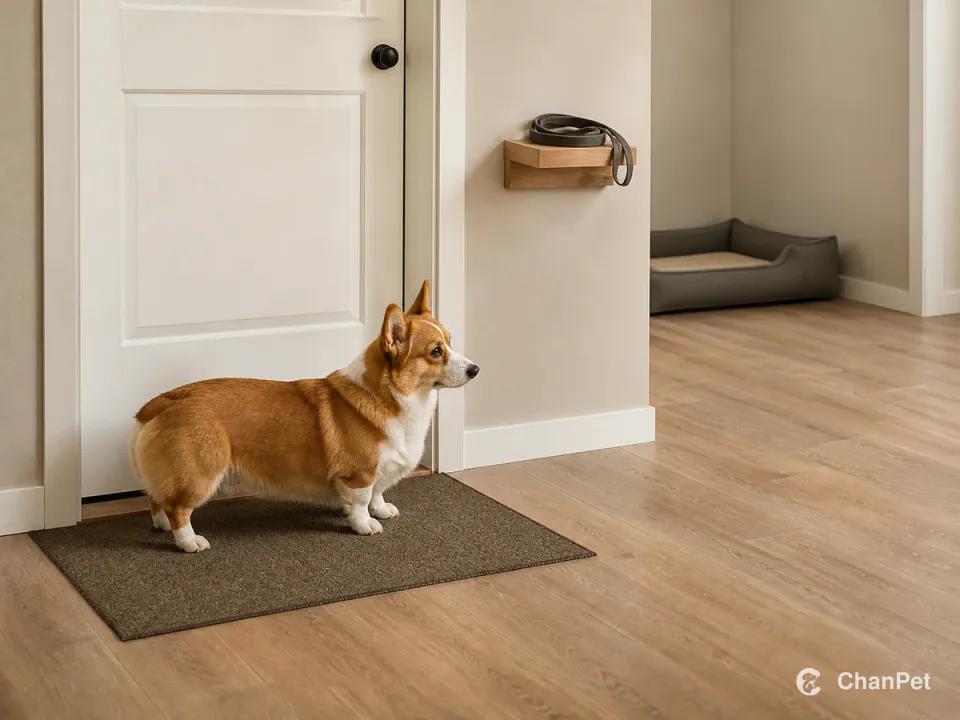
A wait mat by the closed door, a stored short lead and a quiet bed turn a few minutes at home into repeatable practice.[1][2][3]
A first dog for people who enjoy small practice
Practise the ordinary exits before they matter
Want to know whether your time and experience suit a Corgi puppy? Start a smart match and compare the first-year routine before you choose a dog.[1][2]
Common questions
When should a Corgi puppy start lead training?
How much socialization does a Corgi puppy need?
Choose many small, safe experiences rather than overwhelming days. Watch the puppy's body language and keep each exposure easy enough that it can stay comfortable and learn.[3]
Sources
Sources used in this article
- [1]Pembroke Welsh Corgi Dog Breed InformationAmerican Kennel Club
- [2]Humane Dog Training Position StatementAmerican Veterinary Society of Animal Behavior