Map the low route before the first busy morning
A Dachshund's long body and short legs make household transitions worth planning. Map the path between bed, food, door, yard, and favorite chair, then clear clutter before the dog learns its daily route.[1]
Choose one calm way to lift and carry the dog, supporting the body with both hands. Ask every adult to use the same routine, so pickup and put-down moments remain predictable instead of hurried.[1][2]
Make toilet trips and leash work easy to read
Give each outing the same simple order: harness, doorway pause, toilet chance, short walk, and return to a resting spot. A repeatable sequence helps a new Dachshund learn what the household asks for outside and inside.[1][2]
Reward the moments you want to see again, such as checking in on leash or waiting at the door. AVSAB supports reward-based training and recommends setting up the environment so the dog has a fair chance to succeed.[2]
Let early socialization stay comfortable and brief
Introduce a puppy to people, surfaces, friendly dogs, and everyday sounds through short, comfortable sessions. AVSAB identifies the early socialization period as important and advises experiences that keep the puppy able to explore.[3]
Bring a tiny treat pouch and a soft mat for visits with friends or the veterinarian. A puppy who can pause on a familiar surface gets useful practice without turning every new place into an endurance test.[3][2]
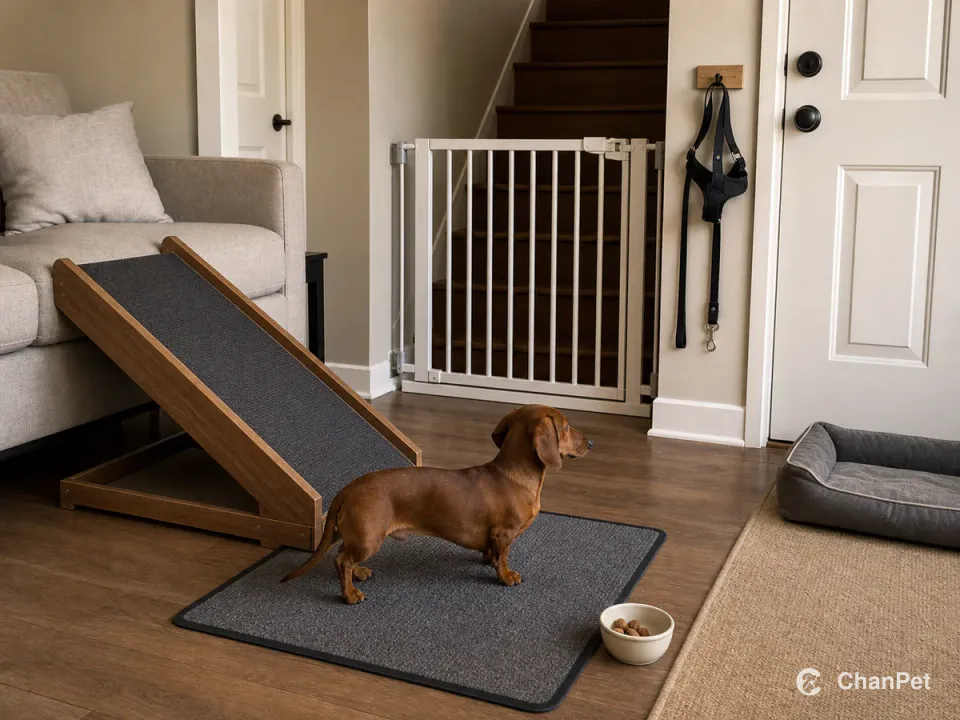
A low ramp, closed stair gate, and fixed doorway mat turn transitions, waiting, and outings into a repeatable first-owner routine.[1][2]
A first owner can do well with a Dachshund by preparing the small moments
Practice one ordinary route before you commit
Walk from the front door to the toilet spot, resting area, and car route, then decide who handles each transition. A path that remains calm on a rainy weekday is a useful first-owner test.[1][2]
Common questions
How should a first owner lift a Dachshund?
Use a calm, consistent household routine that supports the dog's body with both hands. Your veterinarian can demonstrate a handling approach tailored to your individual dog.[1]
Does puppy socialization need crowded places?
Choose brief, safe exposures that leave the puppy comfortable enough to explore. If the puppy becomes worried or retreats, make the next session easier and shorter.[3]
Sources
Sources used in this article
- [1]Dachshund Dog Breed InformationAmerican Kennel Club
- [2]Position Statement on Humane Dog TrainingAmerican Veterinary Society of Animal Behavior