Make everyday routes part of training
Great Danes are giant dogs, so a hallway, front door, or narrow gap beside a table deserves practice while the dog is still small. Choose one clear path from entry to resting area and reward calm movement along it.[1][2]
Teach a pause before doors, a check-in while turning, and a quiet wait beside furniture. The adult handling the lead can keep each route predictable as the dog gains size and reach.[1][2]
Practice car access before a real trip
Test the vehicle opening, the walk from house to car, and the place where the Great Dane will stand or lie down. Make slow loading and unloading a routine lesson rather than a last-minute test.[1][2]
Reward a calm wait while someone opens a door, adjusts a blanket, or checks the route. Those simple repetitions give a giant dog a familiar job during busy departures.[2]
Give visitor arrivals a large-dog plan
Set up a mat, interior gate, or separate room before a guest rings the bell. One adult can guide the dog to that place while another person opens the door without a giant body joining the threshold crowd.[1][2]
Rehearse the sequence with familiar visitors during a quiet part of the day. A repeated plan lets the Great Dane learn where to go when the household gets active.[2][3]
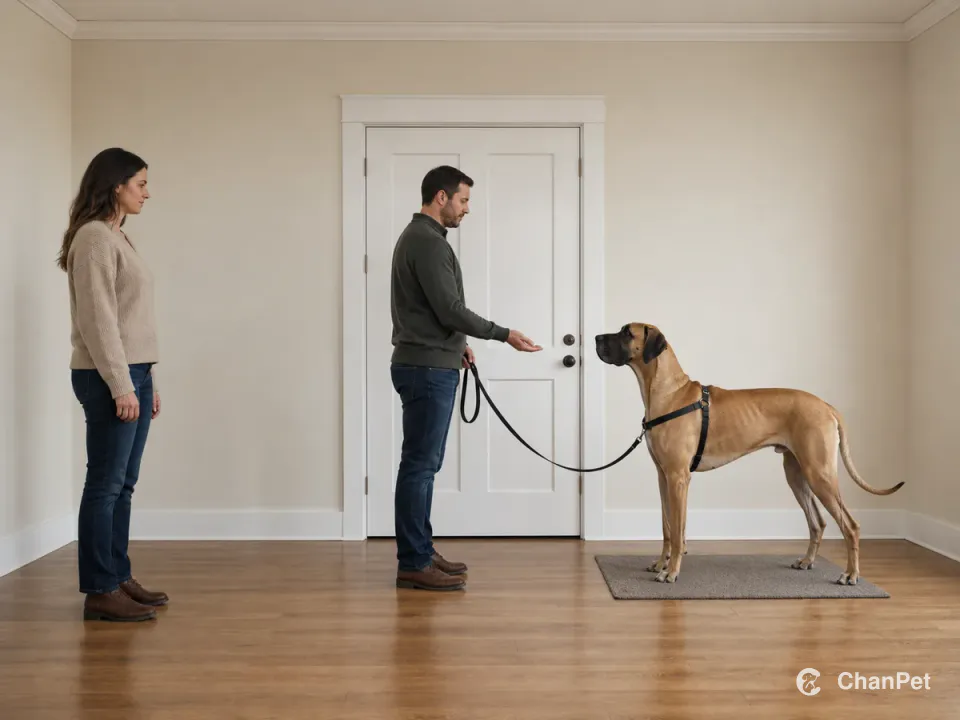
The visitor stays back while the Great Dane turns to its caregiver; repeating this small routine makes an adult giant dog easier to guide.[1][2][3]
A first owner needs a plan sized for the adult dog
Rehearse the giant-dog moments now
Walk the hallway, car route, doorway pause, and visitor plan with every adult who will help. The small rehearsal shows whether the home is ready to scale up.[1][2]
Common questions
Why start doorway practice early with a Great Dane?
Sources
Sources used in this article
- [1]Great Dane Dog Breed InformationAmerican Kennel Club
- [2]Position Statement on Humane Dog TrainingAmerican Veterinary Society of Animal Behavior
Socialize with space and soft choices
Early social learning should let a Great Dane puppy experience people, dogs, surfaces, and sound at a manageable scale. Set the puppy far enough from the action that the future giant dog can observe without crowding the scene.[3]
Reward a relaxed pause, an easy turn toward you, or a quiet choice to take space. Those skills help the future giant dog navigate visitors, sidewalks, and shared indoor areas.[3][2]