Meet the cat before you fall for the breed story
Ragdolls are often gentle, playful cats that enjoy people. They are also large cats with their own preferences. Spend unhurried time with the individual cat. Notice whether it approaches, pauses, plays, or watches from a safe distance. That tells you more than a photograph ever will.[1]
Before the cat comes home, ask for its food, vaccination, parasite-control and medical records. Bring those papers to the first veterinary appointment. A real history makes it easier to keep useful routines going rather than guessing what changed after the move.[2]
Give the first room a clear job
Set up one quiet room with a hiding place, a litter box, water, food and a sturdy scratching surface. Keep the bowl and litter box apart. A cat uses those places for different jobs, and separated resources make the room easier to understand on day one.[3]
Open the carrier and let the Ragdoll make the first move. Sit nearby, speak softly and keep the room boring in the best way. Guests and eager children can wait. A quiet start gives you a chance to see how this particular cat eats, rests and asks for contact.[2][3]
Start coat care while it is easy
A Ragdoll has a medium-length, silky coat, and weekly grooming is part of ordinary care. Leave a comb near a favorite resting spot. A short, calm brush after dinner builds a familiar habit before the coat gathers loose hair or a small knot turns into a sore spot.[1]
The first week also shows you where the cat likes to stretch, scratch and watch the room. Use those clues. Add a broad scratcher near that route and a stable high resting place once the cat is ready to explore. Large cats need equipment that stays put when they use it.[1][3]
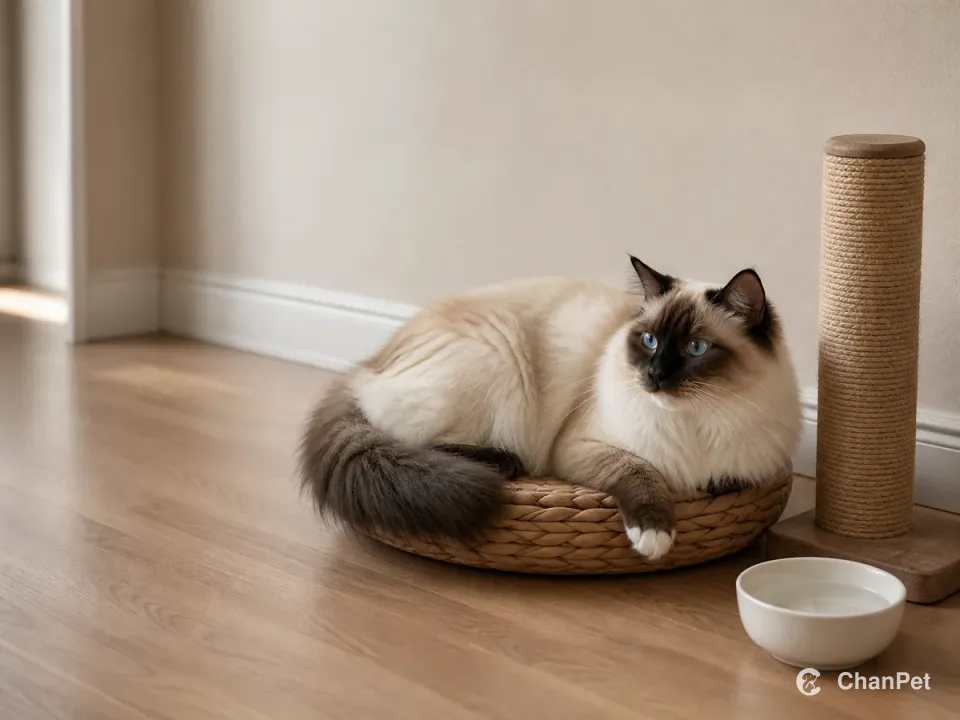
The first room works best when rest, water and scratching each have a clear place.[2][3]
A good first cat for someone who enjoys the daily details
Make the first week easy to read
A calm room, separated resources and a few quiet grooming minutes will reveal far more than a rushed introduction. If that rhythm sounds good to you, a Ragdoll can be a rewarding first cat to learn with.[1][3]
Common questions
Should a Ragdoll have the whole house on the first day?
What should I ask for when I collect a Ragdoll?
Ask for medical, vaccination, parasite-control, medication and feeding information. Keep the documents together and take them to the first veterinary appointment. They give the new care team a useful starting point.[2]
Sources
Sources used in this article
- [1]RagdollThe Governing Council of the Cat Fancy
- [2]Choosing and Caring for Your New CatCornell University College of Veterinary Medicine, Cornell Feline Health Center
- [3]Your Cat's Environmental Needs: Practical Tips for Cat CaregiversFeline Veterinary Medical Association and International Cat Care