The evening two-minute check is the real daily job
Fill food and fresh water, then look at the bottle, wheel and bedding before you turn in. RSPCA advises a complete hamster diet and fresh water. These small checks catch a leak, empty bottle or spoiled food while the fix is still simple.[1][2]
Watch the hamster while it is awake. You can notice a change in movement, fur, appetite or droppings without forcing an inspection. RSPCA and Merck both emphasize regular health observation, because small animals can change quickly.[3][2]
Automation has limits
A water bottle can save a refill, and a camera can show a wheel turning. Neither one tells you whether the spout has clogged, food has gone stale or the hamster looks unwell. Equipment supports the routine; your eyes finish it.[1][2]
Keep a small supply basket near the enclosure: food, clean bedding, a safe cleaning cloth and a spare bottle part if you use one. The little restock keeps a normal care task from turning into a late-night search through cupboards.[1][3]
Reset the home without erasing the nest
Weekly care includes removing soiled areas, checking the wheel and looking over the enclosure. Keep some familiar nesting material where it is clean and safe. A hamster uses scent to make its space make sense, so a full dramatic reset every week can be more disruptive than useful.[3][2]
Use the reset to check nails, teeth and body condition from a respectful distance. RSPCA lists changes such as wetness around the rear, weight loss or poor coat condition as reasons to seek veterinary advice. The best maintenance routine includes knowing when it has moved beyond home care.[3]
Travel care still needs a real person
A hamster's small size can make a weekend away look easy. The daily checks still need doing. Choose a carer who can refill food and water, spot a problem and contact you or a veterinary practice. Explain the evening routine in person before you leave.[1][3][2]
Leave clear supplies and one page of notes: feeding, water, cleaning, your contact and the veterinary contact. A prepared carer can spend time observing the hamster instead of trying to decode a new setup in the dark.[2]
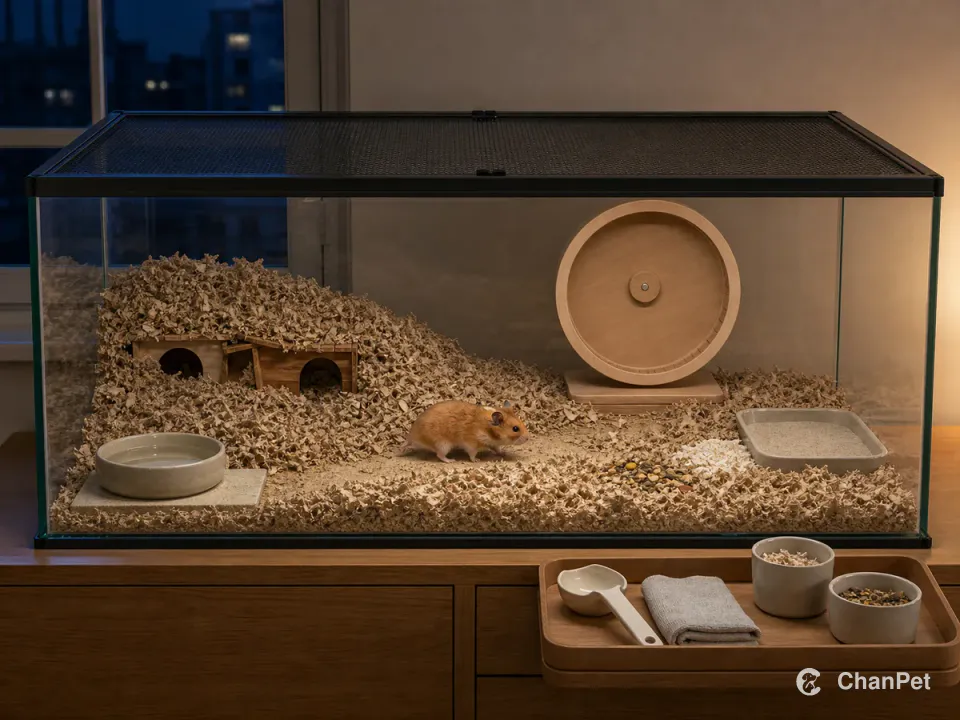
When evening activity begins, water, food, spot hygiene and bedding condition each need a check. The outside maintenance tray keeps those small daily jobs in a repeatable order.[1][3][2]
Low-maintenance fits people who like small routines done well
Count the tiny daily jobs before you decide
Want to see if a golden hamster fits your routine? Start a smart match and include your daily checks, travel plans and evening time.
Common questions
Can a water bottle and camera cover care while I am away?
Sources
Sources used in this article
- [1]What To Feed a Pet HamsterRSPCA
- [3]Hamster Health & Welfare TipsRSPCA
- [2]Routine Health Care of HamstersMerck Veterinary Manual