The morning is not a five-minute job
A sun conure starts the day with a social presence, not a silent decoration. Food, fresh water, a clean area and a few minutes of observation are the first jobs. You also need to decide when the bird will have safe activity and when the room will be quiet again.[1][2]
Keep the routine visible. A short care list beside the cage helps every adult remember food preparation, cleanup, cage checks and time with the bird. Welfare assessment for companion parrots looks at the whole daily environment, which is why a missed routine can matter more than a missed toy.[3][2]
Enrichment needs changing, not piling up
A crowded cage full of old toys is not an enrichment plan. Offer safe things to explore and work with, then notice what the bird uses. Rotate or refresh them so the bird has reasons to investigate without losing the familiarity of its home.[3][1]
Think about enrichment as part of the schedule. It needs preparation, cleanup and supervision, just like food and safe flight. When people call a sun conure low maintenance, this is often the invisible work they have left out.[3][2]
Busy weeks still need a full care plan
A cage may make a parrot look contained, yet the care does not pause when you travel, get sick or work late. A backup caregiver needs more than a food scoop. They need to understand safety, cleaning, the bird's daily rhythm and the signs that deserve a call to an avian veterinarian.[2][3]
If you need a pet that can fade into the background for several days, choose another animal. A sun conure needs someone who can be present and attentive even when the rest of life gets demanding.[1][2]
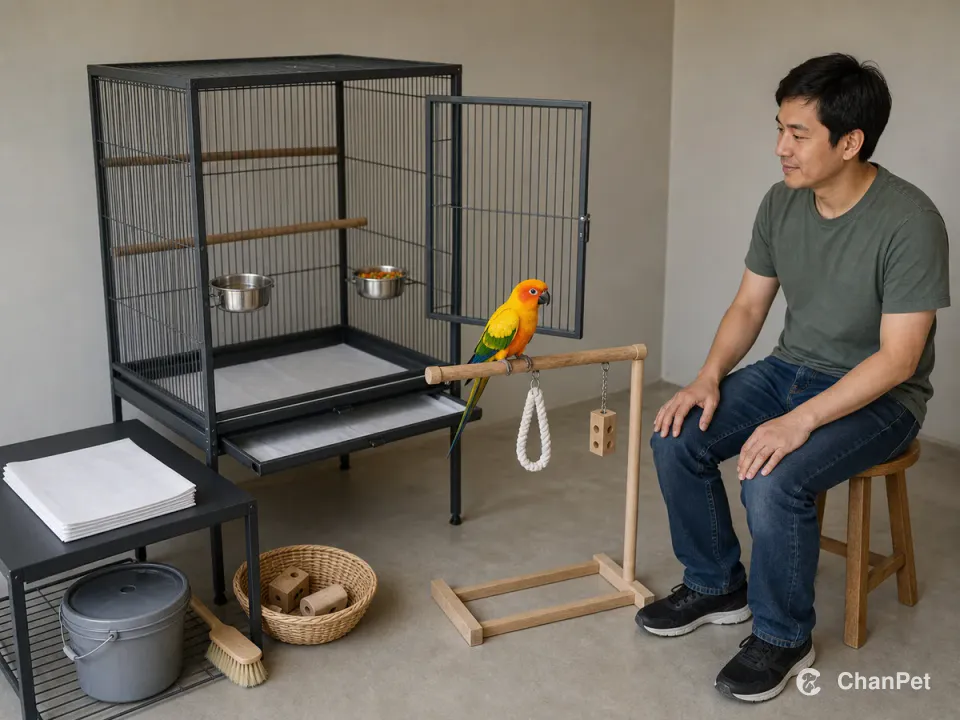
Food, out-of-cage activity, social observation, tray cleaning, and rotating enrichment all return in the same daily care cycle.[2][3]
The routine is the commitment
Compare animal care needs against the daily time and backup support you can consistently protect.
A parrot's care takes place between the obvious jobs
Common questions
Can I leave a sun conure with food and toys for a busy weekend?
Sources
Sources used in this article
- [1]Sun Conure (Aratinga solstitialis)World Parrot Trust
- [3]PsittaWel: A welfare assessment tool for companion parrotsAnimal Welfare / PubMed
- [2]Management of Pet BirdsMerck Veterinary Manual