Put the cat on the week you dread
Take the week with the early lecture, late lab, group deadline and laundry pile. Add the cat's meals, litter, play and quiet check-in beside each commitment. You should be able to point to the time these jobs happen, not just hope an open hour appears.[1][2]
The Exotic's calm-looking face and plush coat can make it easy to picture a quiet study buddy. The real cat still needs food, a clean box, a usable environment and a person who notices when its usual behavior changes. Those needs arrive on deadline days too.[3][2]
Choose a backup who can see the details
Name a person who has a key, knows the food and litter routine, can find the carrier and has the clinic contact. Let them do a normal evening before you need them in exam week. A roommate who knows the cat's ordinary resting place can notice a real difference more easily.[1][2]
Leave a note with the usual meal, play cue, eye-area routine and any health history that is useful to share. Keep it short enough to use. The best handover note helps another person care for this cat instead of giving them a folder to decode.[1][3]
Plan breaks before the roommate moves out
Decide early whether the cat will travel with you or remain in a familiar home with a trained carer. If a move is coming, prepare the carrier, food, litter and one quiet arrival room before the last week of classes. A smooth move starts before the packing boxes appear.[1][2]
A new room changes the sounds, smells and paths the cat knows. Bring familiar resources and introduce the home at the cat's pace. The Exotic's coat and appearance remain familiar, while the cat still needs time to settle into the new routine.[3][2]
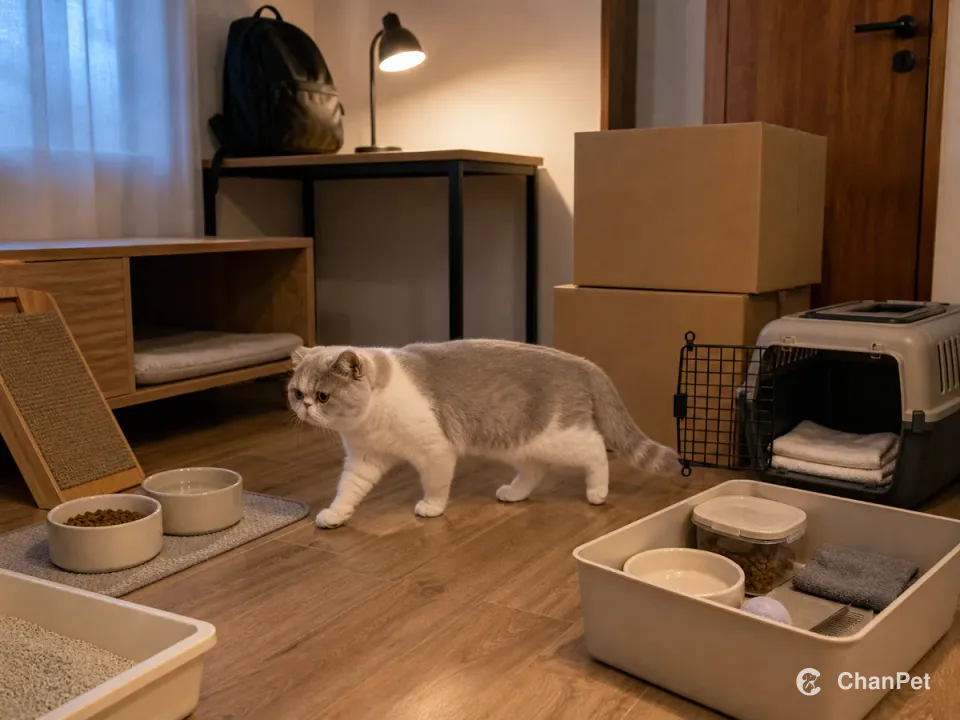
The familiar food, litter, activity and observation route continues through a busy week, while the prepared carrier and care tote give breaks, moves and backup handoffs a practical starting point.[3][2][1]
Student life needs a care plan that survives the busy week
A timetable becomes a care plan when the gaps are covered
Test the packed week, let your backup carer practice and decide the next break in advance. That gives an Exotic Shorthair a more stable home than a promise made during a quiet Sunday.[3][2][1]
Common questions
Can a roommate cover an Exotic Shorthair during a short trip?
Sources
Sources used in this article
- [3]ExoticThe Cat Fanciers' Association
- [2]Your Cat's Environmental Needs: Practical Tips for Cat CaregiversFeline Veterinary Medical Association and International Cat Care
- [1]Choosing and Caring for Your New CatCornell University College of Veterinary Medicine, Cornell Feline Health Center